You know the frustrating cycle all too well. Your team delivers exceptional results for clients. The work speaks for itself. Yet somehow, when prospects ask, “Why should we hire you?” the perfect answers scatter like startled birds. Your sales conversations stretch longer than necessary, filled with explanations that never quite capture what you actually accomplished.
The missing piece? Proof that persuades.
Well‑crafted case studies are not just marketing assets—they’re your most effective salespeople. They work tirelessly, convincing prospects while you sleep, shortening sales cycles that previously dragged on for months. They transform skeptical leads into confident buyers by answering the one question that matters most: “Can you deliver results for someone like me?”
This guide gives you a repeatable system for turning client successes into compelling content that attracts and converts high‑value prospects.
Authenticity in marketing is becoming one of the biggest competitive advantages a business can build in 2026.
AI has made it easier than ever to create marketing content. A business can generate blog posts, social media captions, advertisements, product descriptions, emails, images, videos, and entire campaigns in a fraction of the time it once took.
That sounds like a marketer’s dream.
But there is a problem.
When everyone has access to the same technology, producing more content doesn’t automatically make your brand more valuable.
In fact, something strange is happening.
The more content businesses produce, the harder it is for customers to find something that actually feels human.
Recent research from Canva found that 97% of marketing leaders now use AI in their daily creative work, while 70% of consumers say they can usually spot AI-generated advertising because it feels like something is missing. Consumers aren’t necessarily rejecting AI, but they are increasingly demanding transparency, originality, emotional connection, and human involvement.
Gartner found a similar warning sign: 49% of U.S. consumers surveyed in March 2026 said GenAI has made the quality of content available worse.
The lesson for business owners is simple:
AI can help you make more marketing. It cannot decide what makes your brand worth caring about.
The Hims & Hers case study begins with an uncomfortable truth: sometimes the biggest opportunity in business isn’t creating something people desperately need. It’s making it easier for them to ask for it.
Before Hims became a billion-dollar healthcare company, men dealing with hair loss, erectile dysfunction, and other sensitive health concerns had to navigate awkward doctor visits, pharmacy counters, and conversations they would rather avoid. The products already existed. The problem was the experience.
Hims saw an opportunity to change that.
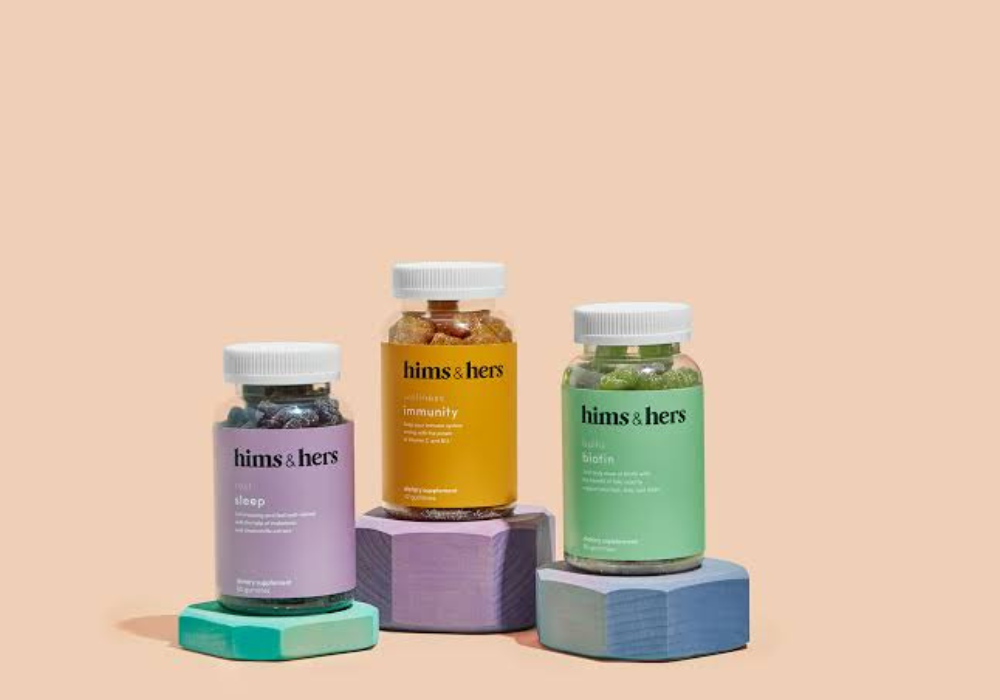
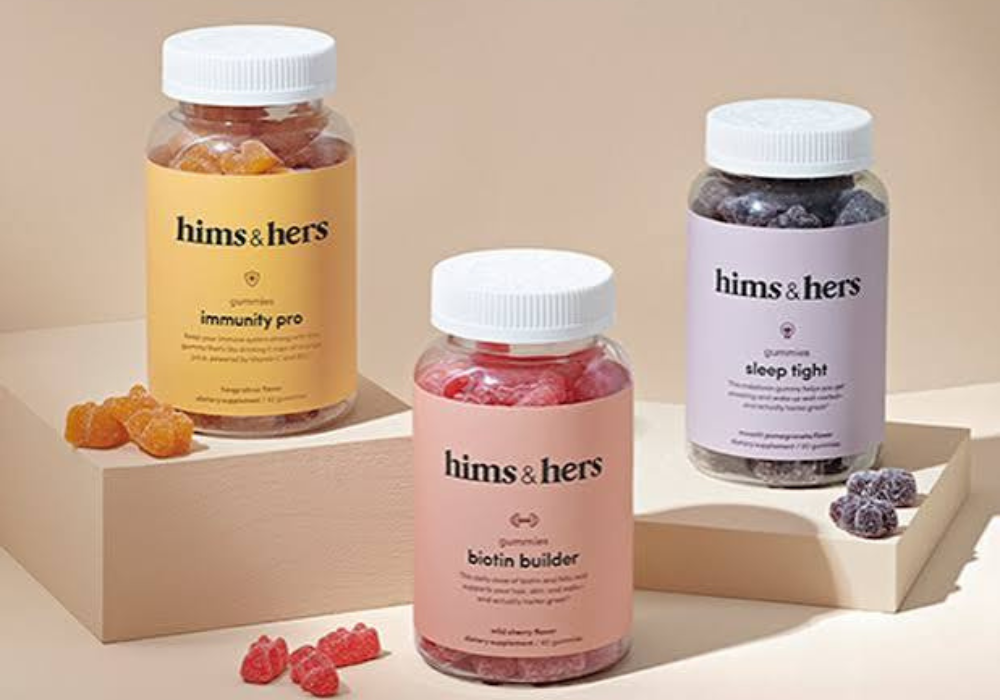
Instead of treating healthcare like a clinical transaction, the company packaged access to care like a modern direct-to-consumer brand: simple online consultations, discreet shipping, recognizable branding, and subscription-based delivery.
That decision turned an uncomfortable healthcare problem into a powerful business model.
But the Hims & Hers case study isn’t simply a story about clever branding or telehealth. It’s a lesson in customer psychology, distribution, positioning, recurring revenue, regulatory risk, and what happens when a company’s fastest-growing product becomes its biggest strategic vulnerability.
From its $30 million launch in 2017 to $1.48 billion in 2024 revenue, Hims & Hers built a remarkably effective front door to healthcare. But the company’s journey also reveals an important warning for founders: you can build a powerful brand around a product you don’t control—and eventually discover that the product has more leverage over your business than you expected.
Here’s how Hims & Hers built the front door, scaled the model, and discovered what was waiting on the other side.
When you first decide to build an ecommerce store, your instinct is almost always visual. You imagine a sleek logo, a perfect color palette, beautiful product photography, and a homepage that looks like a work of art. You want your brand to stand out, look professional, and impress everyone who clicks the link.
But here’s the hard truth: customers don’t buy pretty—they buy clear.
A beautiful ecommerce store can still lose sales if visitors can’t quickly find what they’re looking for, understand why they should buy it, trust the brand, or figure out how to complete their purchase. Design matters, but functionality, clarity, and a frictionless customer experience matter more when your goal is to turn visitors into customers.
Think about the difference between a high-end conceptual boutique and a well-organized hardware store. The boutique might feature mood lighting, minimal signage, and products hidden in artistic displays. The atmosphere is an experience, but if you need a specific pair of jeans, the lack of direction is frustrating.
Now picture the hardware store. It won’t win any design awards. The lighting is harsh and the floors are concrete. But when you need a specific bolt, the aisle markers tell you exactly where to go. You find it, you buy it, and you leave satisfied.
Your ecommerce store should work the same way.
The goal isn’t to create the most visually impressive website possible. It’s to create a store that makes buying feel obvious. From your homepage and navigation to your product pages, checkout, trust signals, and mobile experience, every element should help customers move confidently toward a purchase.
In this guide, you’ll learn how to build an ecommerce store that sells, reduce friction, strengthen customer trust, optimize your product pages and checkout, and validate the entire buying journey before you start pouring more traffic into your store.













 English