


Table of Contents
I stood in a drugstore aisle in 2013, my hand trembling as I held a tube of mascara. My mom’s final battle with cancer had ended six months prior. For years, I had watched this vibrant, beautiful woman lose not just her hair and lashes to chemotherapy, but pieces of her identity. The makeup we bought to help her feel like herself was often a disappointment—irritating, ineffective, or tested on animals. In this fluorescent-lit aisle, surrounded by shelves of products that felt disconnected from real human struggle, the clarity was sudden and absolute.
(Reconstructed founder sentiment based on public interviews): “I didn’t just see products. I saw a profound gap between what beauty promised and what it delivered in life’s hardest moments. I saw a need for more than pigment; I saw a need for purpose.”
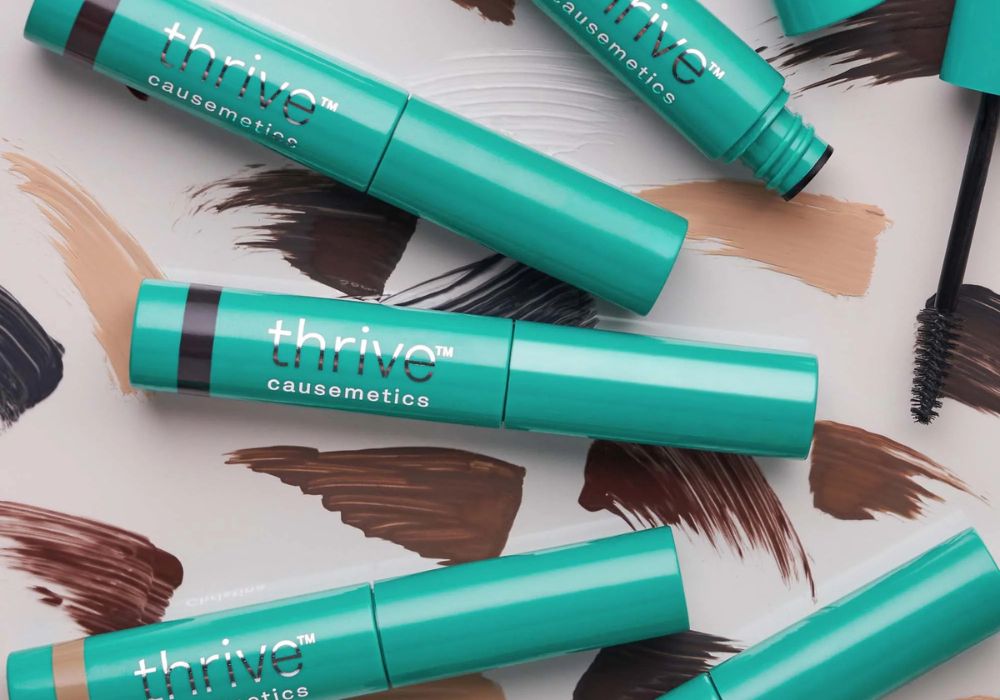
That moment catalyzed a $450M private company. From that personal grief, Thrive Causemetics was born—not as a cosmetic line, but as a vehicle for radical generosity. We launched in 2015 with a single product and an unwavering mission: to create high-performance, vegan, cruelty-free cosmetics that fund donations for women facing illness, trauma, and adversity. In our first full year, we reached $1 million in revenue. By 2021, we were generating an estimated $165 million annually, all while donating over $75 million worth of products and cash grants through our Thrive Causemetics Giving Fund.
The Founder Story Behind Thrive Causemetics
I am Karissa Bodnar, and Thrive Causemetics is the manifestation of a promise. Before founding the company, I was a 26-year-old beauty executive at companies like Estée Lauder and Mark. I saw the industry’s inner workings—its margins, its marketing, its disconnection. The spark wasn’t just my mother’s experience; it was the culmination of volunteering with orphaned children in Bolivia and seeing firsthand how something as simple as a lipstick could restore a sense of dignity.
The problem was multi-faceted: the beauty industry lacked authentic empathy. It sold aspiration but often ignored real women in crisis. It relied on animal testing and animal by-products. It was saturated with products that made bold claims but failed under duress—like during chemotherapy.
The initial idea was a single product: a lash extension serum that actually worked and was completely vegan. I bootstrapped the company with my life savings of $8,000, formulating the product in my Seattle apartment. The early challenge was existential: convincing anyone to believe in a one-product startup with a “buy one, give one” model in the crowded beauty space. I was a solo founder, handling everything from product development to fulfillment. We did not take venture capital; we grew organically, reinvesting every dollar back into the business and our giving mission, which allowed us to maintain full control of our values.
Thrive Causemetics Audience, Positioning, and Brand Differentiation
Our initial target audience was broad: compassionate consumers who wanted clean, vegan beauty. We quickly refined this to a psychographic, not just a demographic. We called them “Conscious Achievers.” These are women, aged 25-45, who make purpose-driven purchases. They research ingredients, value transparency, and see their buying power as a vote for the world they want. They might be a cancer survivor, a busy professional who volunteers, or a new mom seeking safe products.
Positioning Map vs. Competitors:
- High-Performance/Luxury (e.g., Charlotte Tilbury, Dior): We match their performance and premium feel.
- Clean/Vegan (e.g., Ilia, Kosas): We match their ethical standards and ingredient integrity.
- Philanthropic (e.g., TOMS, Warby Parker): We share the “one-for-one” ethos but execute it differently.
Our key differentiators:
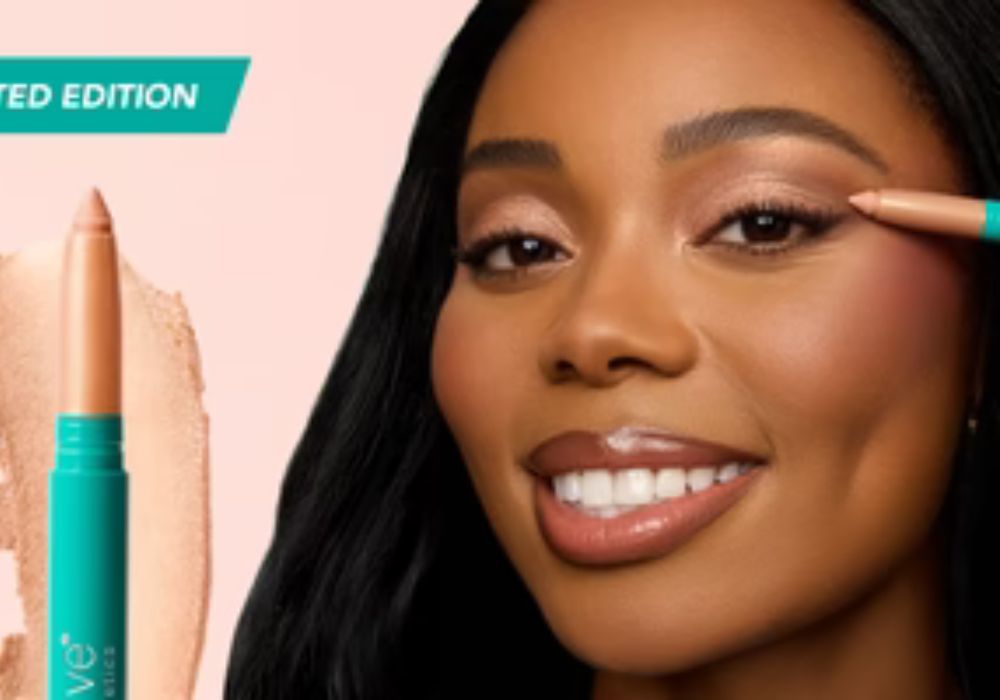
- Mission-Led Performance: We don’t ask customers to sacrifice quality for conscience. Our Triple Threat Color Stick, for instance, is a cult-favorite for its pigment and blendability, not just its mission. Independent reviews consistently praise performance.
- The “Buy One, Give One” Beauty Model: We don’t just donate a percentage of profits; we have a direct product-for-product and cash grant program. For every product purchased, we donate a product or its cash equivalent to a non-profit partner like the Pink Lemonade Project (for cancer support) or the National Network to End Domestic Violence.
- Surgical Transparency: We list every ingredient and its purpose. We publicly track our giving in real-time via a counter on our website and publish annual Impact Reports detailing financials, donation volumes, and grant recipients.
Marketing Strategies That Fueled Thrive Causemetics’ Growth
We prioritized platforms where authentic storytelling and community could flourish.
- Instagram & Facebook: Visual platforms were essential for showcasing product results (before/after photos) and, more importantly, sharing donor recipient stories. User-Generated Content (UGC) became our most powerful asset.
- Email Marketing: This is our owned channel hub. We use it for deep storytelling, announcing new non-profit partnerships, and exclusive launches for our “Thrive Tribe.”
Campaign 1: “The Inflection Point” – Liquid Lash Extension Mascara Launch (2017)
- Goal: Establish Thrive as a serious, high-performance brand and drive first-time customer acquisition.
- Creative: Focused on extreme close-up video before/afters from real customers, not models. Messaging tied lash transformation to inner confidence.
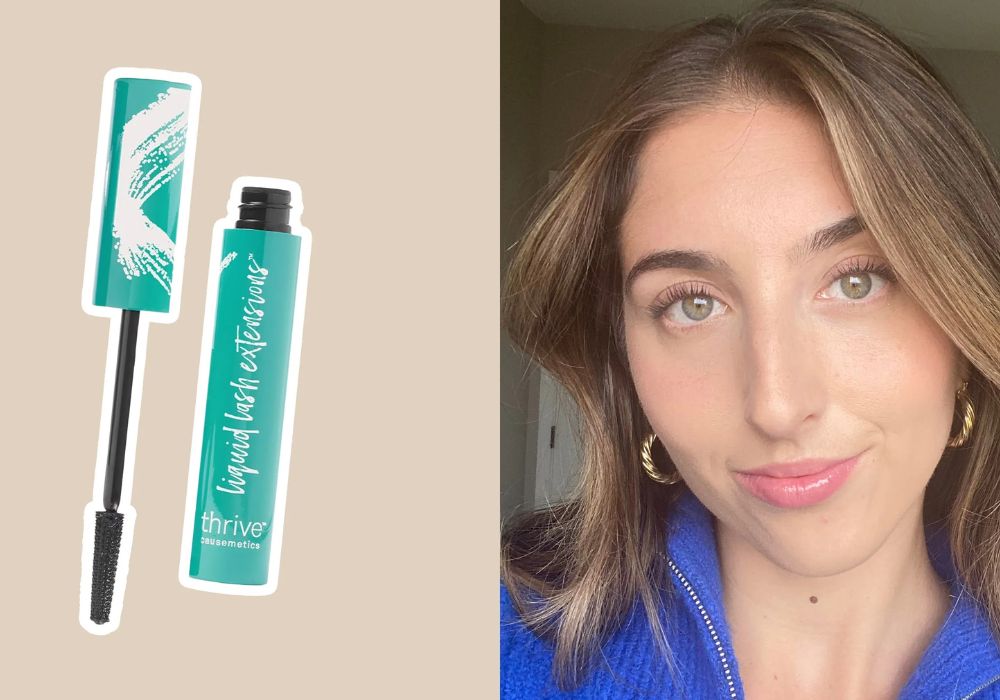
- Performance: While exact spend is not publicly disclosed, the mascara became our hero product, responsible for an estimated 25% of early revenue. It consistently holds a 4.8+ star rating from tens of thousands of reviews, indicating exceptional conversion and loyalty.
- Outcome: This product put us on the map. It proved our model worked: a superior product that funded donations.
Campaign 2: “Beauty with a Purpose” Holiday Campaign (2020)
- Goal: Maximize Q4 revenue while dramatically increasing donation impact and brand awareness.
- Creative: Featured stories from women who had received donations through our partners. Highlighted limited-edition sets where purchasing specific bundles triggered larger cash grants.
- Performance: Not publicly verifiable in detail, but industry analysis credits our mission-focused messaging during the pandemic-conscious holiday season with significant sales lifts. We donated over 450,000 products that year, a spike aligned with this campaign period.
Failed Campaign: The Early “Generic Influencer” Push (2015)
- What Happened: We initially worked with macro-influencers who had large followings but no authentic connection to our mission. The content felt promotional and hollow.
- Lesson: We learned that a smaller, highly engaged community built on shared values is infinitely more valuable than a large, disengaged audience. We pivoted to partnering with micro-influencers, cancer survivors, and non-profit advocates whose stories resonated with our core. This shift defined our authentic voice.
Technology and Analytics Stack Powering Thrive Causemetics
Our stack is built for a direct-to-consumer (DTC) model focused on lifetime value.
- E-commerce Platform: Shopify Plus. Provides scalability and a robust app ecosystem.
- Analytics: Google Analytics 4 for tracking site-wide behavior, funnel analysis (from ad click to donation), and audience insights.
- Advertising Tracking: Facebook Pixel (Meta) and TikTok Pixel for retargeting and campaign optimization.
- CRM & Email: Klaviyo. Used for sophisticated segmentation (e.g., customers who buy mascara, donors who engage with impact stories) and automated flows.
- Social & UGC: Tools like Stackla or TINT to source, manage, and display real customer photos and videos on our site.
Key KPIs Tracked:
- Customer Acquisition Cost (CAC) vs. Lifetime Value (LTV): We closely monitor this ratio to ensure sustainable growth.
- Donation Impact Metrics: Products donated, cash granted, partner organizations supported.
- Email Engagement Rates: Open and click-through rates on mission-focused content vs. product-focused content.
- Return Rate: We track this diligently as a proxy for product satisfaction and quality.
Key Growth Milestones in the Thrive Causemetics Journey
- 2015: Company founded by Karissa Bodnar. Launch of first product (Lash Extension Serum).
- 2017: Launch of Liquid Lash Extension Mascara. The brand’s breakout product, driving exponential awareness and revenue growth.
- 2018: Expansion into complexion category (CC Cream, Concealer). A strategic move to become a full-face brand and increase basket size.
- 2019: Thrive Causemetics Giving Fund officially established as a public charity, formalizing and scaling the giving model.
- 2020: Major retail partnership launched with QVC, significantly expanding reach to a new, trust-driven audience.
- 2021: Estimated annual revenue reaches $165 million. Total donations surpass $75 million.
- 2023-Present: Continued retail expansion into Sephora (online and in-store), marking a major milestone in mainstream prestige beauty recognition.
Challenges, Failures, and Strategic Pivots at Thrive Causemetics
Setback 1: The Scaling Formula Crisis
(Reconstructed sentiment): “In year two, demand suddenly spiked. We faced the terrifying ‘good problem’ of potentially selling out. Do we slow marketing to meet inventory, or risk backorders and angry customers? Our entire giving model depended on sales volume.”
- Postmortem: We chose to be transparent about inventory constraints with our customers and temporarily capped purchases. We used the capital from early sales to fund larger, more efficient production runs. This reinforced trust—we valued customer experience over a quick sale. It forced us to build sophisticated supply chain forecasting earlier than anticipated.
Setback 2: The “Greenwashing” Accusation
- Postmortem: As “clean beauty” boomed, skeptics questioned if our mission was a marketing ploy. We responded not with PR statements, but with radical transparency. We doubled down on publishing our financials, detailed impact reports, and facilitating direct connections between customers and our non-profit partners. We let the proof speak.
Setback 3: Navigating a Pandemic
(Reconstructed sentiment): “March 2020 froze us. Would anyone buy makeup? We immediately pivoted our messaging from ‘look pretty’ to ‘feel strong.’ We highlighted how our donations were supporting frontline workers and women in lockdown facing domestic violence.”
- Postmortem: This agility, rooted in our core mission, resonated deeply. Sales grew during the pandemic because we connected beauty to resilience, not vanity. It validated that our brand was built on a value system, not a trend.
How Thrive Causemetics Became a Household Beauty Brand
We achieved recognition not through traditional celebrity endorsements, but through authentic cultural penetration.
- PR Strategy: We focused on mission-driven, not product-driven, press. We pitched stories about our impact model to outlets like Forbes, Fast Company, and GOOP. The founder’s personal story became a relatable entry point.
- Viral Moments: Customer testimonials, especially from cancer survivors and transplant recipients who used and received our products, created powerful, organic word-of-mouth. Before/after videos showcasing the efficacy of our mascara or brow products have millions of collective views.
- Cultural Breakthrough: The partnership with QVC was pivotal. The live-show format allowed for long-form storytelling about the mission, connecting with an audience that values trust and purpose, dramatically expanding our household reach.
- Retail Validation: Entering Sephora, a gatekeeper of prestige beauty, was the final stamp of industry legitimacy, introducing us to millions of new customers in a curated environment.
Financial and Operational Insights from Thrive Causemetics
- Revenue Milestones:
- 2016 (est.): ~$1M
- 2021 (est.): $165M
- Current Status: Remains a private, profitable company. Exact 2024 revenue is not publicly verifiable.
- Funding: Bootstrapped with $8,000 founder savings. No venture capital raised. This is a cornerstone of the brand’s narrative, allowing full control over mission and growth pace.
- Unit Economics:
- CAC: Not publicly disclosed. However, the high LTV and low return rates suggest a healthy ratio.
- LTV: Industry analysts estimate it is exceptionally high for DTC beauty due to strong loyalty, repeat purchase rates, and high average order value from full-face routines.
- Retention: A significant portion of revenue comes from existing customers, fueled by a robust email/SMS program and new product launches that complement existing favorites (e.g., a liner to go with the mascara).
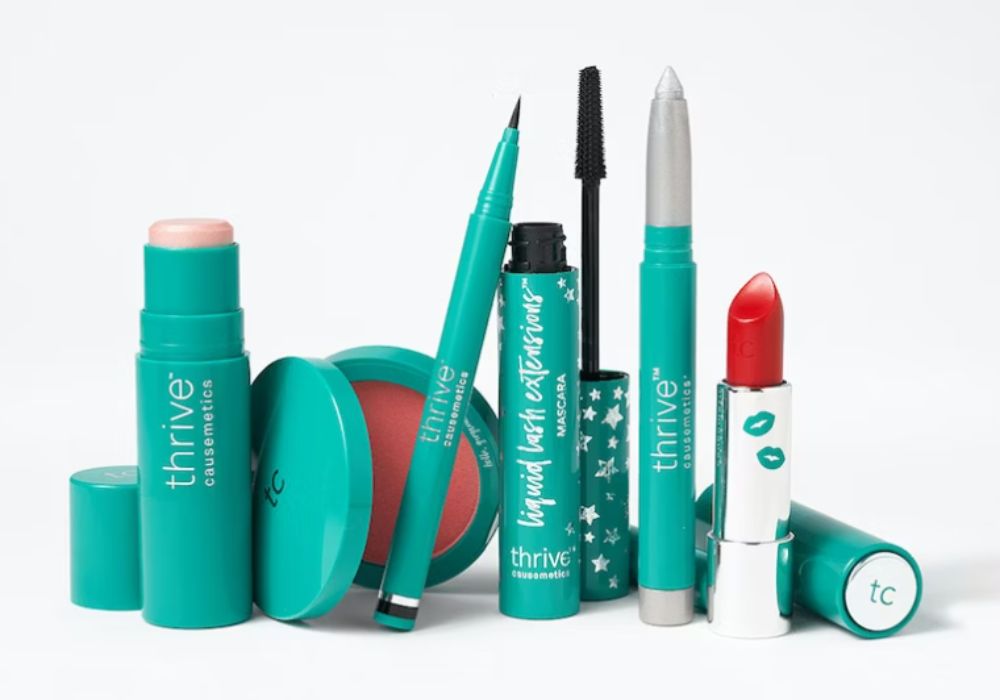
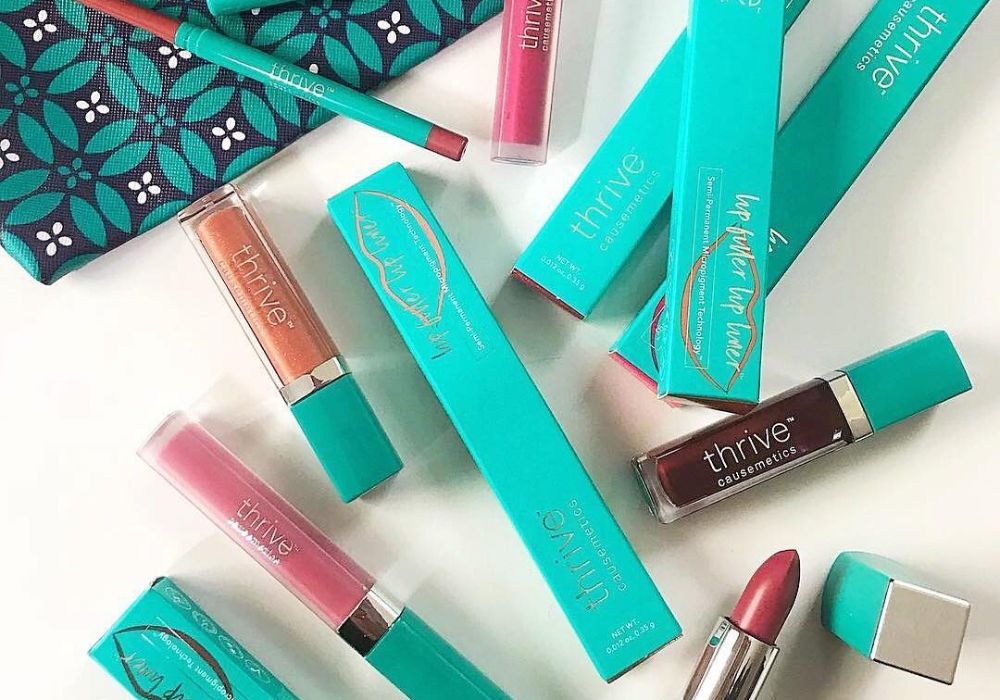
- Product Iteration: We follow a “hero-led” innovation strategy. After the mascara success, we expanded into brows (Brow Fix), then complexion, then lips. Each category launch is designed to meet the same standard of performance and create another donation stream.
Founder Lessons from the Thrive Causemetics Case Study
(Actionable Playbook)
- Build from a Personal Scar, Not a Personal Interest. Your deepest pain point can reveal the most authentic market need. Action: Interrogate your own frustrations before analyzing market gaps.
- Bootstrap Until Your Model Sings. Outside capital often demands compromise. Action: Use constraints to force creativity and prove unit economics before scaling.
- Make Your Mission Your Moat. A truly integrated social mission is defensible and attracts a loyal tribe. Action: Weave giving into your operational costs, not your marketing budget.
- Prioritize Psychographics Over Demographics. Sell to a mindset, not an age bracket. Action: Craft messaging that speaks to values, not just lifestyle.
- Transparency is the New Trust. Over-share your “how.” Action: Publish your failures, your costs, your impact data. Let customers audit you.
- Let Customers Be Your Best Content. UGC is more credible than any photoshoot. Action: Create systems (hashtags, reposting, rewards) to actively solicit and showcase real-user stories.
- Own Your Channel (Email). Algorithms change; your email list does not. Action: Offer value in your emails (stories, education) beyond just promotion.
- Launch a Hero, Not a Collection. Dominate one category with a flawless product. Action: Pour all resources into making one thing the best in its class. Let it pull the rest of your line.
- Partner with Complementary Audiences. QVC wasn’t an obvious choice for a DTC brand, but their audience’s values aligned perfectly. Action: Seek partners who share your customer’s values, not just their demographics.
- Pivot the Narrative, Not the Core. During the pandemic, we shifted messaging from “beauty” to “strength” without changing our products. Action: Keep your mission constant, but let its expression adapt to the cultural moment.
Building a brand like this doesn’t happen in isolation.
Business Builders Circle (BBC) is a free community for founders and operators who want:
- Proven business frameworks
- Accountability and peer support
- Practical tools, resources, and systems
- Real conversations about growth, not hype

 English