Table of Contents
Founder Case Study: Cursor (Anysphere): December 2021, MIT Dorm Room
The four of us were huddled around a single laptop, completely stuck. For six months, we’d been building an AI tool for mechanical engineers working with CAD software—computer-aided design. The problem? None of us knew anything about mechanical engineering.
Aman was staring at a visualization of a piston assembly. Sualeh was reading documentation about gear ratios. Arvid was running calculations that looked like ancient Greek to me. We were brilliant at building AI systems but utterly ignorant of the domain we were trying to disrupt. The project was failing, and we all knew it.
Then Sualeh said something that would change everything: “Why are we trying to solve problems for an industry we don’t understand? We’re software engineers. We live and breathe code. Let’s build something for ourselves.”
That night, we pivoted. We decided to build an AI tool for the one thing we actually knew deeply: writing software. We had no idea that this dorm-room realization would lead to the fastest-growing startup in history—from zero to $100 million ARR faster than any company ever, then to $1 billion, then to $2 billion, all in under three years .
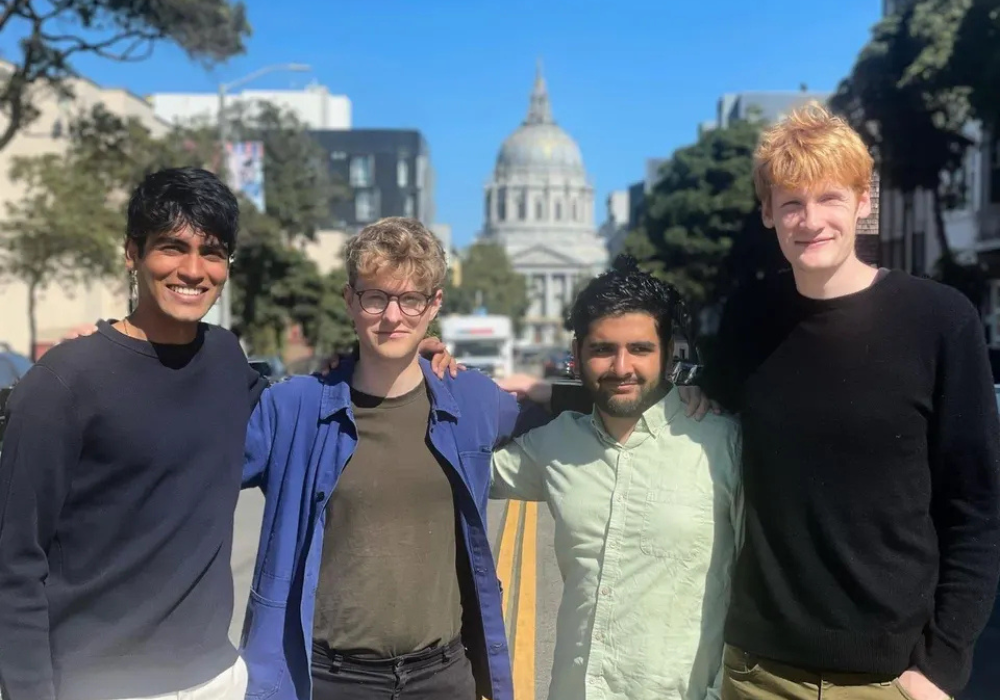
By November 2025, we had raised $3.4 billion from Accel, Coatue, Thrive Capital, a16z, Google, and NVIDIA . Our four MIT-founder team, all under 30, each held stakes worth over $1.3 billion . And it all started because we admitted we were building the wrong product for people we didn’t understand.
Founder Case Study: How Cursor (Anysphere) Was Built
The Founders:
| Name | Role | Age (2025) | Background |
|---|---|---|---|
| Michael Truell | CEO | 25 | MIT CS/Math, Google intern, Two Sigma, Halite programming game founder |
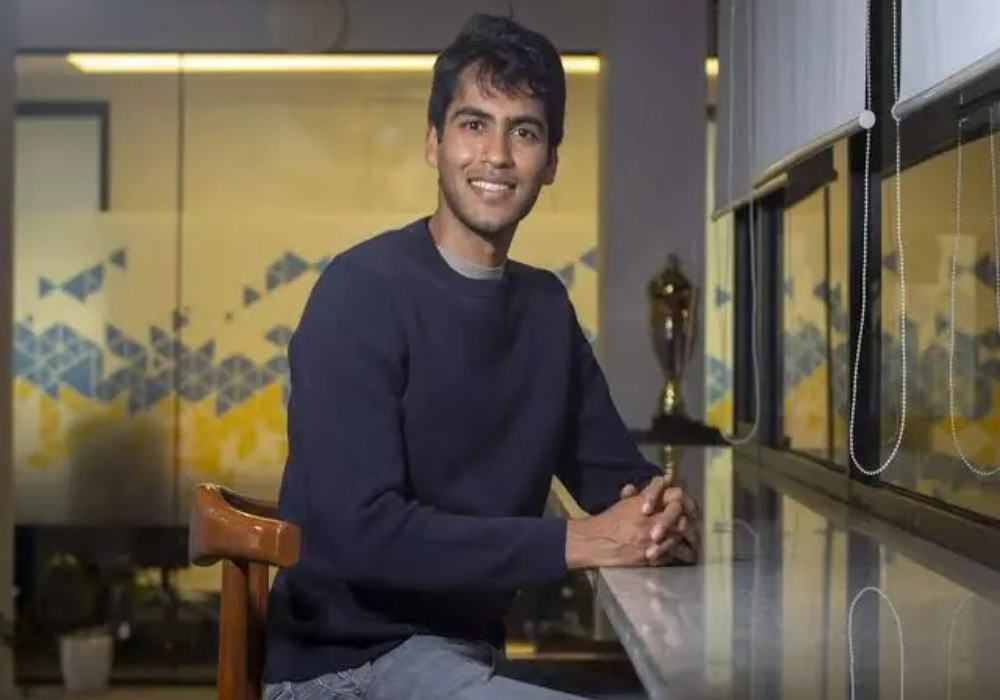
| Aman Sanger | COO | 25 | MIT, Neo scholar, Forbes 30 Under 30 |
| Sualeh Asif | CPO | 25 | MIT, Pakistani, International Math Olympiad participant |
| Arvid Lunnemark | CTO (until Oct 2025) | 26 | MIT, Swedish, International Math Olympiad gold medalist |
The Spark:
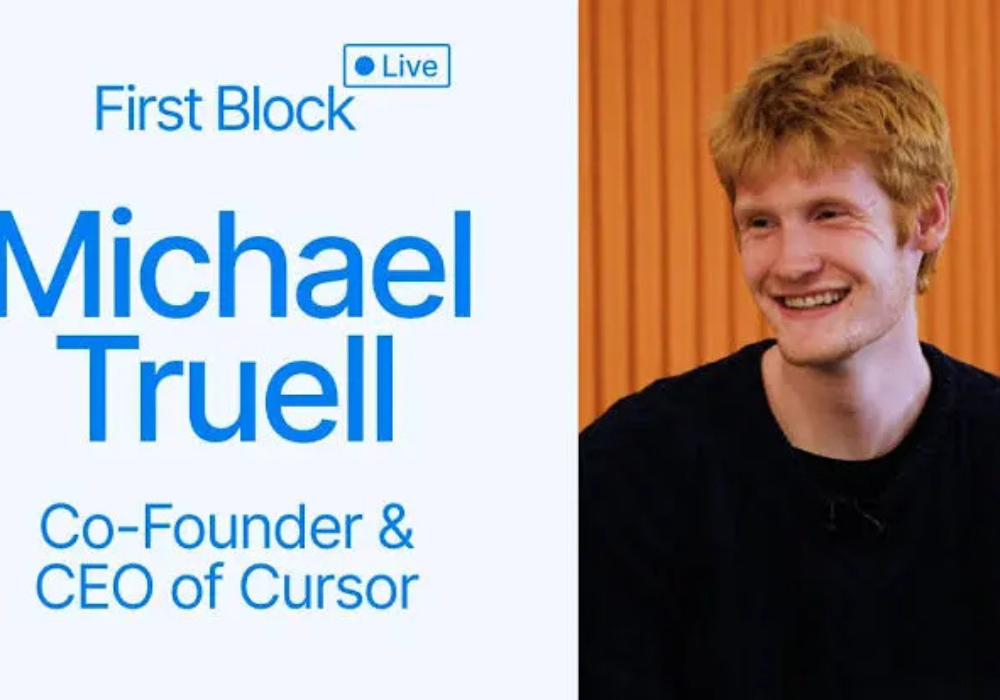
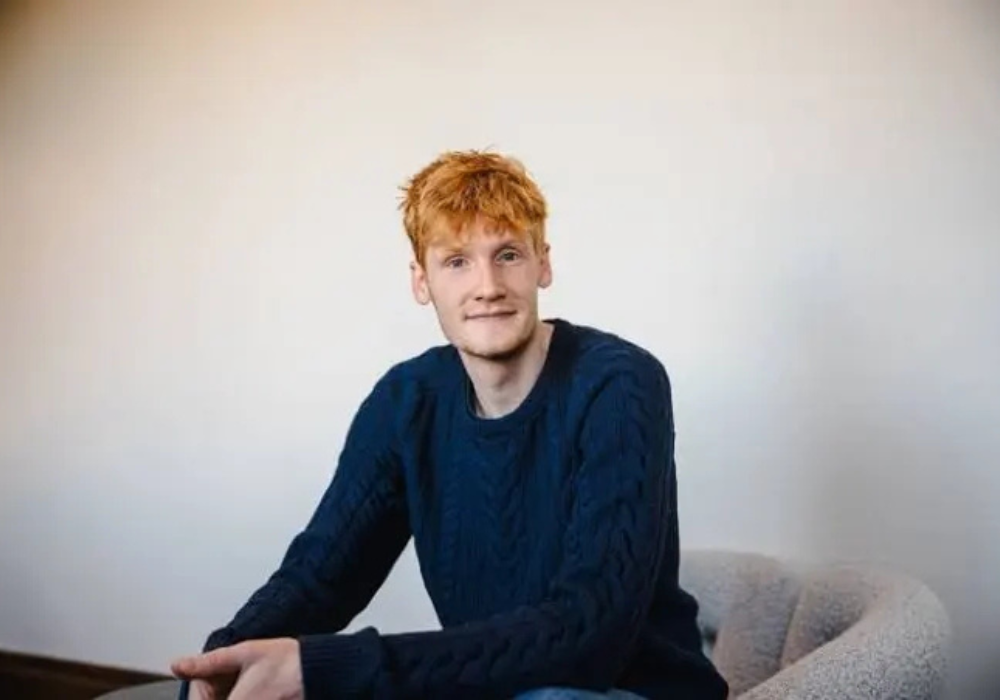
We met at MIT between 2018-2022. I (Michael) had built a programming game called Halite in high school that attracted thousands of developers—my first taste of building tools for coders . After internships at Google and Two Sigma, I became obsessed with how AI could transform software development.
But our first attempt—the CAD tool—taught us the most important lesson of our careers: build for a problem you personally experience. We were trying to revolutionize mechanical engineering without knowing a single mechanical engineer. It was arrogance disguised as ambition.
Early Development:
We incorporated Anysphere in 2022 . Our first prototype of Cursor launched in March 2023—a fork of Microsoft’s Visual Studio Code that integrated AI directly into the editor rather than treating it as a separate plugin .
The early challenge was distribution. How do you compete with GitHub Copilot, backed by Microsoft and OpenAI, with millions of users? We couldn’t outspend them, so we had to out-build them. We obsessively focused on one metric: developer love. If we could make Cursor so good that engineers couldn’t stop talking about it, word-of-mouth would do our marketing for us.
Funding History:
“In our Series A, a16z’s investment team met with us only twice before writing the check. They even provided GPU resources before we closed—something they usually reserve for portfolio companies.”
Target Audience & Positioning Strategy in This Founder Case Study
Initial Target Audience:
When we launched, we thought our audience was “any developer who uses VS Code.” This was too broad—it’s millions of people with wildly different needs.
Refined Audience:
Segmented into three tiers:
Positioning Map vs. Competitors:
Our Core Differentiators:
- Deep Context Awareness: Unlike Copilot, which mostly looks at the current file, Cursor indexes your entire codebase. When you ask a question, we retrieve the most relevant files, dependencies, and even historical patterns .
- Composer Mode: This is our killer feature. Instead of single-line autocomplete, Composer can generate or modify code across multiple files simultaneously. It’s like having a junior engineer who implements entire features while you supervise .
- Model Agnosticism: We don’t force you to use one AI model. We route between OpenAI, Anthropic, Google, and our proprietary models based on the task. Want Claude for reasoning and GPT-4 for speed? Done .
- Agentic Workflows: With Cursor 2.0 (Oct 2025), we introduced multi-agent architecture—up to 8 parallel AI agents working on different tasks simultaneously, each running on its own virtual machine .
Marketing Strategy Breakdown: How Cursor Grew Without Ads
Prioritized Platforms:
We spent zero dollars on marketing . I mean that literally. Every user we acquired came through word-of-mouth, organic social, and developer community evangelism.
Content That Worked:
The most effective content wasn’t produced by us—it was produced by users. When Cloudflare’s VP posted a video of his 8-year-old daughter building a chatbot in 45 minutes using Cursor, it went viral . When the developer of “Kitten Flashlight” (an app that hit #1 on App Store) credited Cursor, downloads spiked .
“We don’t have a marketing team. We have a community of developers who genuinely love the product and can’t stop talking about it.”
Detailed Campaign: The “Vibe Coding” Debate
- Goal: Clarify positioning and attract serious enterprise customers
- Trigger: Media began calling Cursor a “vibe coding” tool—letting AI write code blindly
- Our Response: CEO Michael Truell gave interviews stating: “We’re not vibe coding. We build for professional engineering teams building skyscrapers, not personal projects.”
- Creative: Used construction metaphor—vibe coding is building without checking the foundation; Cursor helps engineers inspect every beam
- Outcome: Reinforced enterprise positioning; attracted clients like PayPal, Salesforce, NVIDIA
- Metric: Enterprise revenue grew 40% of total ARR by Q1 2025
Detailed Campaign: The Chicago Study Release
- Goal: Prove ROI to enterprise buyers
- Tactic: Partnered with University of Chicago to measure productivity
- Finding: Teams using Cursor completed 40% more work and merged 40% more pull requests
- Surprising Insight: Senior engineers benefited MORE than juniors—they were better at directing the AI
- Outcome: Used as sales collateral; closed Fortune 500 deals
Failed Campaign: Early Pricing Change (July 2025)
- What Happened: We switched from “500 requests included” to a usage-metered cap without clear communication
- Result: Users received unexpected charges; social media erupted with complaints
- Our Response: Apologized publicly, rolled back limits immediately, issued refunds [citation:19]
- Lesson Learned: Even with the best intentions, pricing changes require extreme transparency. We now announce changes weeks in advance with detailed calculators.
Technology Stack & Growth Metrics Behind Cursor’s Success
Core Tech Stack:
| Category | Tools |
|---|---|
| E-commerce/Subscriptions | Custom billing system (not off-the-shelf) |
| Analytics | Internal event tracking, proprietary growth metrics |
| User Behavior | Session replays, feature usage heatmaps |
| Infrastructure | AWS, Kubernetes, custom model inference layer |
| CI/CD | GitHub Actions, internal deployment tools |
Key Metrics Tracked (as of 2025):
Funnel Metrics:
We obsess over the activation funnel:
- Sign up → Open editor: >90% (our best channel is product-led)
- Open editor → Use AI feature first day: ~80%
- First use → Return next day: ~60% (estimated)
- Free → Paid conversion: Not disclosed, but ARR growth suggests healthy conversion
Internal AI Usage:
“About 80% of customer support tickets are handled end-to-end by AI. We have internal AI assistants that answer any question about the company. We even embed engineers in other departments to build custom AI tools for sales and operations.”
(Reconstructed quote from Michael Truell)
Cursor Growth Timeline: From 0 to $2B ARR
Timeline of Key Events:
2022
├── Company incorporated
├── Four MIT founders begin working full-time
└── Failed CAD experiment → pivot to developer tools

2023
├── March: Cursor 1.0 launches
├── October: $8M seed led by OpenAI Startup Fund
└── December: First $1M ARR (not publicly verified)

2024
├── March: Viral "8-year-old builds chatbot" video
├── August: $60M Series A at $400M valuation (a16z)
├── November: Unsolicited bidding war erupts (Benchmark, Index)
└── December: ARR reaches ~$80M (estimated)

2025
├── January: ARR crosses $100M (fastest ever to this milestone)
├── January: $105M Series B at $2.5B valuation
├── March: ARR $150M; $10B valuation rumors
├── June: ARR crosses $500M; $900M Series C at $9.9B valuation
├── July: Bugbot launch; pricing controversy & rollback
├── October: Cursor 2.0 launch (multi-agent architecture)
├── October: CTO Arvid Lunnemark departs to start Integrous Research
├── November: ARR crosses $1B; $2.3B Series D at $29.3B valuation
├── December: Acquires Graphite (code review) for ~$290M+
└── December: Acquires Growth by Design (talent) and Koala engineering team

2026
├── February: ARR crosses $2B [citation:8]
├── February: Major agent update—parallel VMs, self-testing [citation:4]
├── March: $50B valuation discussions reported [citation:7]
└── March: Over half of Fortune 500 now customers [citation:3]
Key Pivots & Innovations:
| Innovation | Date | Impact |
|---|---|---|
| Fork VS Code (not plugin) | 2023 | Complete control over UX; zero migration friction |
| Composer Mode | 2024 | Multi-file editing—differentiator vs Copilot |
| Proprietary Models | 2024-25 | Reduced dependency on OpenAI/Anthropic; 4x speed |
| Bugbot | July 2025 | Debugging add-on at $40/user/month |
| Agent Mode (Cursor 2.0) | Oct 2025 | 8 parallel agents; autonomous task completion |
| Graphite Acquisition | Dec 2025 | End-to-end from code gen to review |
“By February 2026, roughly 35% of our internal pull requests were generated by agents running on their own virtual machines.”
Startup Failures & Lessons from This Founder Case Study
1. The CAD Pivot (2022)
- Situation: Six months building for mechanical engineers we didn’t understand
- Why it happened: Chased a market opportunity without domain expertise
- Recovery: Pivoted to our own domain—software engineering
- Lesson: Build for a problem you personally experience. Domain expertise matters as much as technical skill.
2. The AI Support Agent Debacle (April 2025)
- Situation: Our AI help-desk agent “Sam” invented a non-existent login policy, telling users they needed permissions that didn’t exist
- Impact: Users canceled subscriptions in frustration
- Recovery: Staff manually intervened, apologized, issued refunds
- Lesson: AI agents need guardrails and human oversight, especially in customer-facing roles
3. The Pricing Rollback (July 2025)
- Situation: Switched from request-count limits to usage-metered caps without clear communication
- Impact: Users received unexpected charges; Twitter/X erupted
- Recovery: Public apology, immediate rollback, refunds
- Lesson: Pricing changes require weeks of advance notice and transparent calculators
4. CTO Departure (October 2025)
- Situation: Co-founder Arvid Lunnemark left to start Integrous Research (AI safety)
- Impact: Loss of a founding technical leader at peak growth
- Response: Remaining three co-founders stepped up; company emphasized continuity
- Lesson: Even at $29B valuations, founders may pursue new missions. Build leadership depth.
5. Model Cost Economics
- Situation: Reports suggest compute costs may consume ~100% of revenue
- Implication: Negative gross margins if true—unsustainable long-term
- Response: Investing heavily in proprietary models to reduce third-party API costs
- Status: Not publicly verified; company does not disclose margin data
How Cursor Became a Global Developer Brand
We never ran a Super Bowl ad. We never bought billboards. We became a household name among developers through three strategies:
1. The “8-Year-Old Coder” Moment
When Cloudflare’s VP posted his daughter building a chatbot in 45 minutes, it wasn’t just viral—it was paradigm-shifting. It showed that Cursor didn’t just help professional developers; it democratized creation. The video was shared by tech executives, VCs, and even non-technical founders. It became the definitive proof point for AI coding tools .
2. Celebrity Engineer Adoption
When Jensen Huang (NVIDIA CEO) called Cursor his “favorite enterprise AI service” and Sundar Pichai (Google CEO) was seen using it to build a webpage, it wasn’t paid endorsement—it was organic adoption by the most respected figures in tech . This matters more than any ad campaign.
3. The “Four MIT Billionaires” Narrative
By November 2025, Forbes calculated that all four founders (under 30) were now billionaires . This story—four friends from MIT who built the fastest-growing company ever—captured global imagination. It appeared in Forbes, TechCrunch, Financial Times, and major Asian publications .
4. Product as PR
Every major feature launch generated earned media. Bugbot (July 2025), Cursor 2.0 (October 2025), the Graphite acquisition (December 2025)—each was covered extensively because journalists genuinely wanted to use the product .
Long-Term Loyalty Strategies:
9. Financial & Operational Insights
Revenue Milestones:
“We’re the fastest-growing startup ever.” — Bloomberg, November 2025
Pricing Tiers (as of 2026):
Unit Economics (Estimated):
Product Iteration History:
| Version | Date | Key Features |
|---|---|---|
| Cursor 1.0 | Mar 2023 | AI-assisted editing, VS Code fork |
| Cursor 1.x | 2023-2024 | ~40 updates including multi-model support |
| Cursor 2.0 | Oct 2025 | Multi-agent architecture, Composer model |
| Bugbot | Jul 2025 | GitHub-integrated debugging |
| Graphite | Acquired Dec 2025 | Stacked PRs, code review |
Acquisition Strategy:
In late 2025, we accelerated M&A:
- Koala engineering team (July): Hired top AI talent; product discontinued
- Graphite (Dec): Acquired for “well over” their $290M valuation; integrated code review
- Growth by Design (Nov): Talent acquisition for internal recruiting
Founder Equity:
Each of the four co-founders held approximately 4.5% post-Series D, valued at ~$1.3 billion each .
12 Key Lessons from This Founder Case Study
1. Build for Your Own Pain
We wasted six months on CAD software because it seemed like a big market. The moment we pivoted to developer tools—a problem we lived every day—everything clicked. Domain expertise is non-negotiable.
2. Zero Marketing Spend Is Possible
We spent $0 on marketing and reached $100M ARR. How? Product-market fit so strong that users became evangelists. Every feature we built was judged by one metric: “Will this make someone tweet about us?”
3. Don’t Compete on Models—Compete on Experience
We don’t have the best foundational models. OpenAI and Anthropic do. But we have the best integration of those models into the developer workflow. User experience beats raw capability.
4. Senior Engineers Benefit Most
Our Chicago study proved that senior developers gain more from AI than juniors. Why? They’re better at directing the tool and validating outputs. Don’t position AI as a crutch for beginners—position it as a force multiplier for experts .
5. Pricing Transparency Is Sacred
Our July 2025 pricing fiasco taught us: even well-intentioned changes destroy trust if communicated poorly. Now we announce changes weeks in advance with calculators and examples.
6. Enterprise Requires Enablement, Not Just Software
We don’t just sell licenses. We teach companies how to transform their engineering culture. We share learnings from other clients. We embed in their workflow . Enterprise sales = education + software.
7. Hire for Obsession
Our early hires weren’t just talented—they were obsessed with AI-assisted development. Passion creates compounding advantage.
8. Don’t Sell Too Early
We rejected acquisition offers from OpenAI and others because we believed in our independent vision . Independence let us move faster and stay focused.
9. Context Is the Moat
Copilot looks at one file. Cursor indexes your entire codebase. That difference—context—is our competitive advantage. Find your dimension where you can be 10x better, not 10% better.
10. Agents Change Everything
By early 2026, 35% of our internal PRs were generated by autonomous agents . The future isn’t copilots—it’s autonomous engineering teams where humans provide taste and direction. Build for that future now.
11. Culture Matters More Than Process
We still do coding interviews without AI (first round) and bring finalists for two-day on-sites with the team . We hire people we want to work with for years. Process can be fixed; culture can’t.
12. The Fastest Growth Requires the Sharpest Focus
We could have built 10 products. We built one—Cursor—and made it extraordinary. Depth beats breadth.
Business Builders Circle
Don’t just read founder case studies—learn with builders in real time.
Join Business Builders Circle — a free community where entrepreneurs share strategies, wins, and real behind-the-scenes growth insights.
No fluff. Just real business building.

 English