0

Tag: time management

Creative professional wearing headphones and working on a laptop in an organized home office with visual planners and colorful sticky notes.

ADHD Productivity Strategies: Work With Your Brain

ADHD productivity strategies work best when they account for how you manage attention, motivation, time, and everyday tasks.

You might have a mind full of ideas but struggle to finish something as simple as replying to an email. Maybe you’ve downloaded productivity apps, tried rigid morning routines, and created detailed to-do lists—only to abandon them after a few days.

It can be frustrating, especially when the advice that seems to work for everyone else doesn’t fit your experience.

The problem may be the system you’re trying to follow.

ADHD can affect executive functions such as planning, working memory, task initiation, and emotional regulation. These challenges can make conventional productivity methods difficult to maintain.

But productivity doesn’t have to mean forcing yourself into someone else’s routine.

With the right tools, you can reduce unnecessary friction, create more flexible structures, and develop habits that support your goals.

In this guide, we’ll explore practical ADHD productivity strategies for organizing your environment, managing time, building sustainable habits, and working more effectively with your individual needs.


Creative professional brainstorming ideas at a home office desk with visual reminders, task checklists, and time management tools representing ADHD productivity strategies.
CONTINUE READING
working-smarter-with-virtual-assistants

Working Smarter with Virtual Assistants: How to Scale Your Business Without Burning Out

You’re drowning in your own success. The business you built to create freedom has become your prison. Every day brings more tasks, more decisions, more customers demanding your personal attention. You started this journey to escape the 9‑to‑5 grind, but now you’re working 60‑hour weeks with no end in sight.

There’s a better way. Smart entrepreneurs worldwide are discovering the game‑changing power of virtual assistants (VAs). Not just any VAs, but strategically chosen professionals who become genuine business partners. They handle complex tasks, make decisions, and drive real growth while you focus on what truly matters.

Consider Becky, a marketing consultant who scaled from $80,000 to $420,000 in annual revenue within 18 months. She built a team of three Philippines‑based VAs who handled client onboarding, content creation, and project management. She went from being buried in administrative work to becoming the CEO of her own growing consultancy.

Or Frank, a digital agency owner stuck at $150,000 in revenue for three years. After partnering with VAs in Colombia and India to manage social media, customer service, and market research, his revenue hit $680,000 within two years. He finally took his first real vacation in five years.

This guide gives you the exact playbook these successful entrepreneurs used. Let’s dive in.

virtual assistants
continue reading
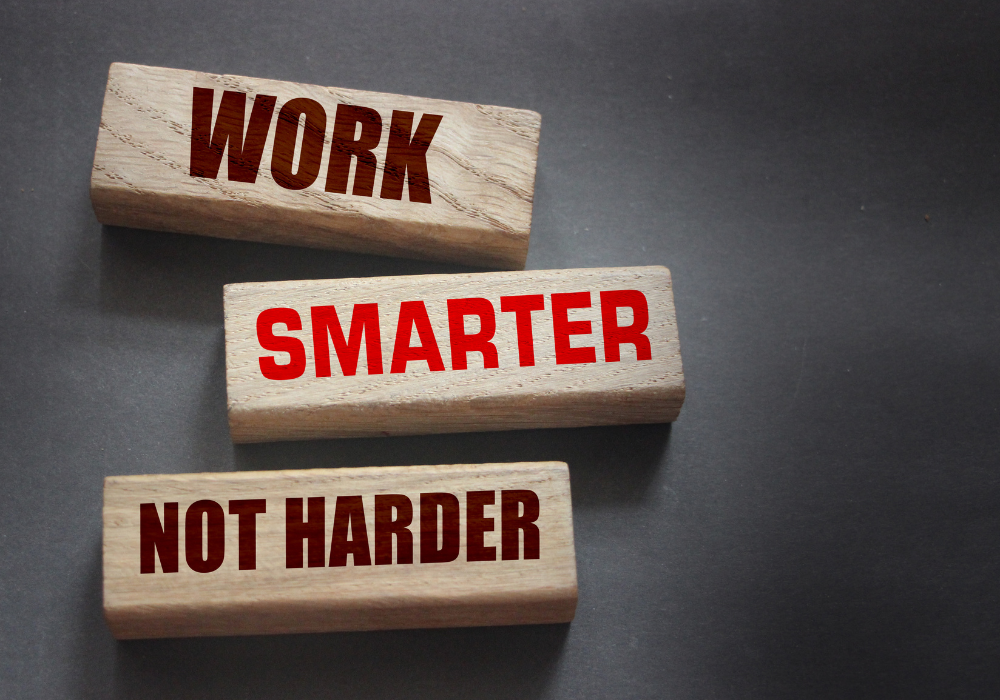
buy back your time: Three wooden blocks are stacked on a dark surface. The top block reads 'WORK' in red capital letters. The middle block reads 'SMARTER' in red capital letters. The bottom block reads 'NOT HARDER' in red capital letters.

Buy Back Your Time: A Founder’s Guide to Working Smarter, Not Harder

You’re drowning in your own success.

Every morning, you wake up to an inbox overflowing with urgent requests. Your phone buzzes with employee questions. Client emergencies demand immediate attention. For many entrepreneurs, the only way forward is to buy back your time—because working harder is no longer sustainable.

According to Forbes, 58% of small business owners work more than 50 hours per week, and 19% work more than 60 hours per week. Meanwhile, entrepreneur burnout rates have reached an all-time high of 72% in 2024. The dream of business ownership has become a nightmare of endless work cycles where freedom feels like a distant memory.

Here’s the brutal truth: working harder is not the answer. It’s actually the problem.

Every extra hour you spend buried in daily tasks is an hour stolen from strategy. Every weekend you sacrifice to “catch up” pushes real growth further away. You’ve become the highest-paid employee in your own company, trapped behind a desk when you should be steering the ship.

But what if the most successful entrepreneurs actually work fewer hours, not more? What if you could reclaim 20–30 hours per week while actually growing your revenue? This isn’t fantasy. It’s a proven system.

buy back your time: Woman working on laptop in office
continue reading
Digital detox setup with devices and decor

Reclaim Your Focus: A Founder’s Guide to Digital Detox and Deep Work

Your phone just buzzed again. Another urgent Slack message. Your laptop shows 47 unread emails, three Zoom invitations, and a dashboard full of blinking metrics that demand immediate attention. It’s a constant storm of digital noise, and somehow, you’re expected to think clearly through it. For many entrepreneurs, this constant noise highlights the growing need for a digital detox for founders—a way to reclaim focus and restore deep work in a distracted world.

digital detox: woven basket with a phone inside sits on a table next to a green water bottle. In the background, a person meditates by a window.

You built your company to create something meaningful. But somewhere along the way, you became a prisoner of your own digital systems. Every ping, buzz, and notification fragments your attention into smaller pieces. What used to be hours of deep thinking has become minutes of reactive scrambling between apps, calls, and crisis management.

This isn’t just annoying. It’s quietly destroying the mental capabilities that made you successful in the first place.

continue reading
en_USEnglish