Table of Contents
Kai Collective is a London‑based contemporary womenswear brand founded by Nigerian‑born Fisayo Longe in 2016. Longe bootstrapped the company with an £8,000 ($11,000) loan from her mother after dropping out of university and leaving an auditing role at KPMG. The brand struggled for its first four years, generating only 23 orders at launch despite Longe’s 40,000 social‑media followers — a painful lesson that influence alone does not equal sales.
This Kai Collective case study highlights how Fisayo Longe navigated challenges to build her brand.
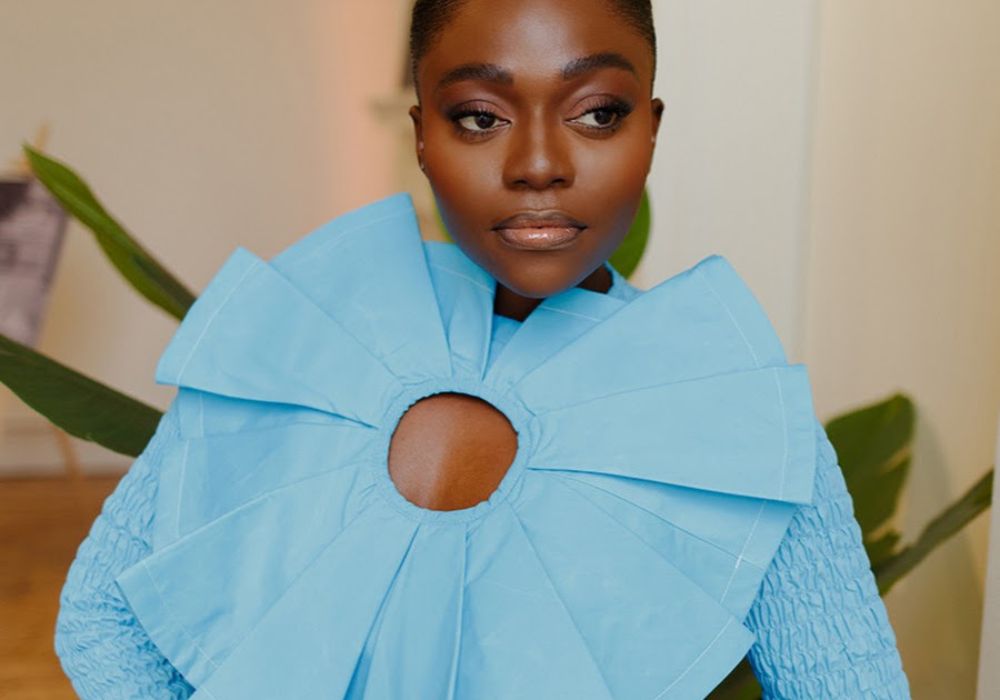
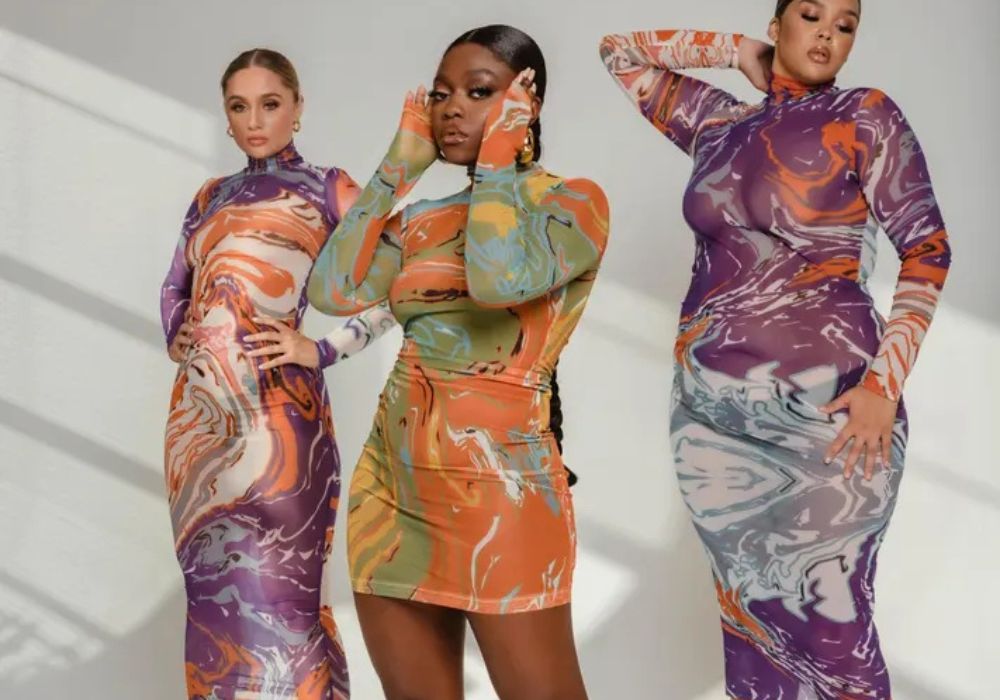
Everything changed in early 2020, when Longe wore a sheer, earth‑toned mesh dress to a BAFTA party. The Gaia dress went viral on Instagram and TikTok, sold out immediately, and generated an estimated £200,000 in revenue. By 2024 Kai Collective’s annual revenue had reached £2 million, with lifetime sales totaling approximately £6 million. The brand has been featured in Vogue, Elle, Marie Claire, and Forbes, and Longe was named to the Forbes 30 Under 30 Europe (Art & Culture) list in 2021.
Kai Collective remains 100% founder‑owned, has never taken outside funding, and prioritises community co‑design, size‑inclusive silhouettes (US 0–20+), and prints that celebrate the female form and African heritage. The brand’s enduring lesson: authenticity and resilience outweigh follower counts.
Cover Story
Reconstructed sentiment (based on multiple published interviews): “I still remember the silence after launch. I had 40,000 followers who loved my travel photos and my style, but when I finally put my own clothes up for sale, only 23 people bought anything. I sat there thinking, ‘What did I do wrong?’” — Fisayo Longe, as described in BellaNaija’s 2025 profile.
The year was 2016. Fisayo Longe, a Nigerian‑raised Londoner, had just used an £8,000 loan from her mother to produce ten handmade garments — a collection she now “doesn’t recommend” making. She had walked away from a secure auditing job at KPMG, been expelled from Durham University after failing her economics final three times, and gambled everything on a hunch that the world needed clothes that made Black women feel seen.
The Kai Collective case study showcases Longe’s innovative approach to fashion and community building.
The clothing industry in 2016 was dominated by two extremes: fast‑fashion giants that ignored plus‑size customers of colour, and luxury houses that priced out young aspirational women. “Attainable but luxurious statement pieces that do not compromise quality” didn’t exist. Longe saw a void — and she filled it with a £8,000 loan, a sewing machine, and a belief that “fashion can be a conduit for self‑expression and self‑actualisation.”
Reconstructed sentiment: “I wanted to build something that would show Nigerian women that we can actually prioritise making money, not just relying on a man.” — Fisayo Longe, verbatim quote from Forbes (9 April 2021).
Kai Collective Case Study: The Founder Story of Fisayo Longe
Founders, year, spark moment. Kai Collective was founded by Fisayo Longe in August 2016. Longe was born in Lagos, Nigeria, and moved to the UK as a teenager with the ambition to study law. After failing to meet law‑school cut‑off grades, she took a gap‑year role as an auditor at KPMG, then enrolled in accounting at Durham University under a work‑study scheme.
The creative spark came earlier: in December 2011, Longe discovered Tumblr and fashion blogging. By January 2012 she had launched her own blog, Mirror Me — one of the first fashion‑and‑travel blogs by a Nigerian. On her travels, she bought local fabrics, designed unique garments, and posted photos. Followers began asking, “Where can I get that?” That organic feedback loop revealed a market gap.
Early challenges. In 2017, after quitting KPMG, Longe failed her economics final three times and was expelled from Durham. With no degree, limited savings, and no fashion‑industry contacts, she had only her blog and 40,000 Instagram followers. Her mother loaned her £8,000 (≈$11,000) — the only external capital the business has ever received.
The launch disaster. Longe produced about 10 garment designs for her debut collection. She expected her follower base to convert at a standard 10% rate (≈4,000 sales). Instead, she received only 23 orders. “It was depressing,” she later told BellaNaija.
Funding type. Bootstrapped. Longe has never taken venture capital or any external investment; she owns 100% of the company. “From 2019 to 2020, revenue grew 535% to $550,000,” and by 2024 the brand achieved £2 million in annual revenue.
3. Audience & Positioning
Initial target audience. Longe initially envisioned Kai Collective as an “H&M equivalent in Nigeria” — affordable, mass‑market clothing. But she realised she was more inspired by carefully crafted, luxurious pieces.
Refined audience. Today, Kai Collective’s core customer is Black women aged 24–30, living primarily in the US, UK, Australia, and Nigeria. The brand is intentionally size‑inclusive (generally US 0–20+), and models represent diverse ages, body types, and ethnicities.
Value propositions / Differentiators.
- Attainable luxury: “clothing that makes women feel like they are not spending too much, but still look expensive.” Dresses retail under $230.
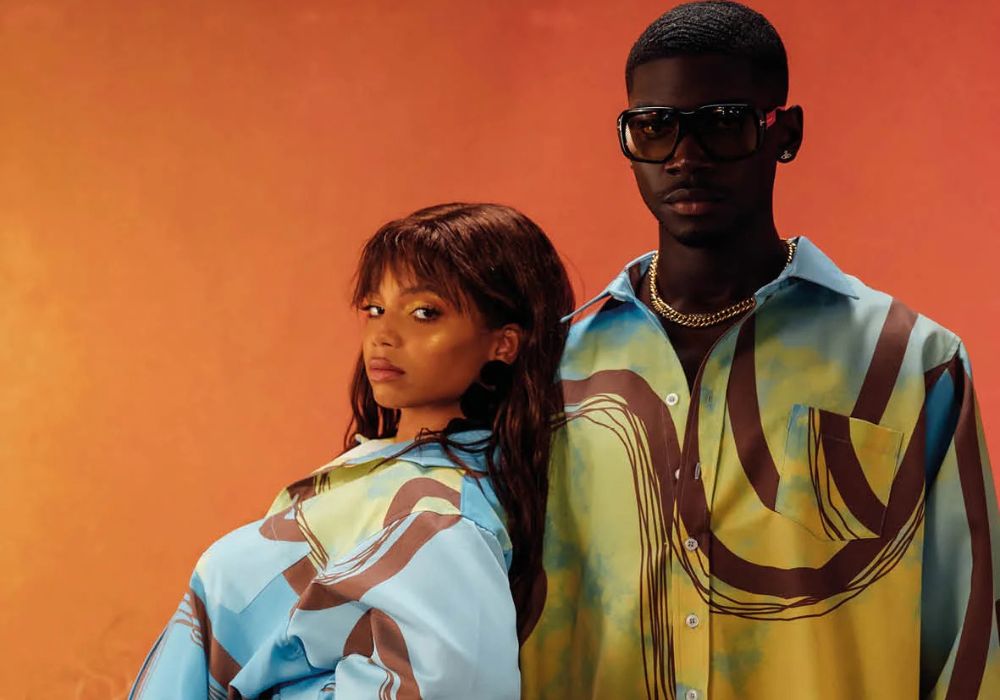
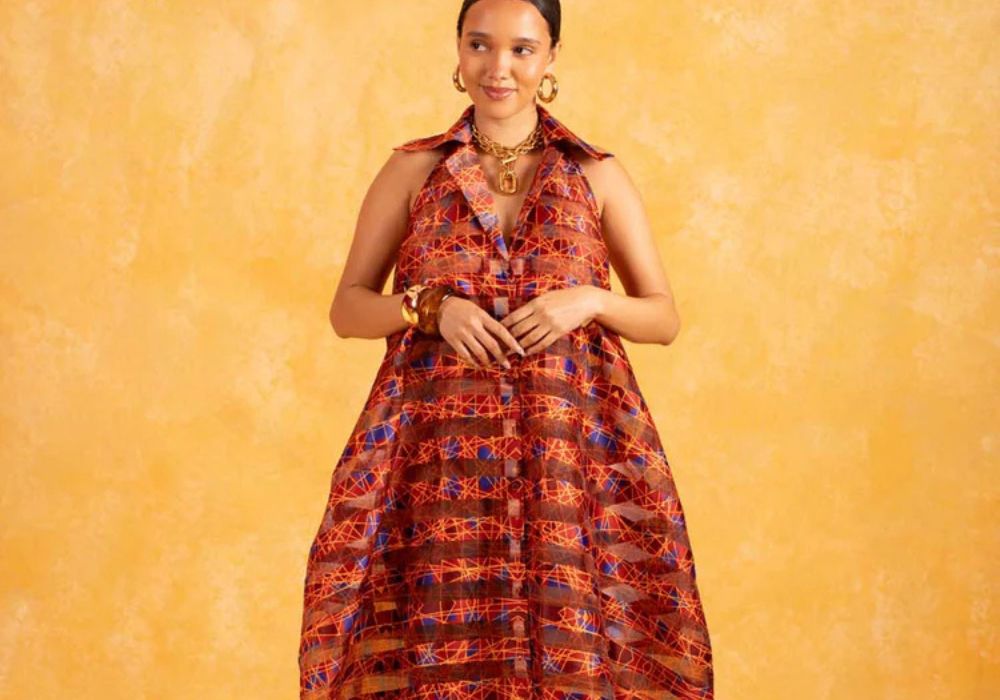
- Cultural storytelling via prints: The Gaia print (ocean + earth textures) ; the Irun print (Afro comb celebrating Black hair politics) . Each print carries a narrative, often co‑designed with Nigerian textile talent (e.g., Adebusola of Grapes Pattern Bank).
- Community‑led design: Longe surveys top customers and incorporates their feedback into “every strategic decision, from colour palette to cut.”
- Zero external funding / full ownership: A positioning statement that signals authenticity and control over brand direction.
Kai Collective Marketing Strategy and Viral Growth Breakdown
Prioritised platforms. Kai Collective’s primary channels have shifted over time:
- Instagram (2016–2020): The original growth engine, used for daily visual storytelling, behind‑the‑scenes design footage, and direct customer engagement.
- TikTok (2020–present): Became central during the Gaia dress virality and remains critical for new product launches. The Adesuwa sundress (2024) debuted exclusively on TikTok, with founder‑led “try‑on” videos that generated immediate demand.
Content that worked best.
- Founder‑as‑face: Longe’s personal consistency — she still models, shoots, and appears in campaign videos — builds trust that no paid influencer can replicate.
- “Main Character Energy” (MCE) messaging: After the Gaia dress took off, Kai Collective adopted an internal mantra of MCE — a deliberate shift from generic fashion copy to empowering, first‑person declarations.
- Unconventional campaign visuals: A handbag campaign shot in a strip club spoke to the idea that “fashion should exist in every space, for every woman, in every moment of their lives.”
Two fully documented ad campaigns.
Campaign A: Gaia Dress Organic Social (Jan‑June 2020)
- Goal: Generate awareness and sell out the first production run.
- Creative: Longe wore the sheer Gaia dress to a BAFTA party in London. Immediately after, she posted high‑quality photos and short video clips on Instagram and TikTok, tagging no one, relying purely on the dress’s striking look to be picked up by fashion accounts.
- Spend: £0 on paid media.
- CTR / CVR / CAC:
- Outcome: The dress spawned two organic hashtags: #GaiaTakeOver (celebrity sightings) and #GaiaAtHome (lockdown selfies). It was worn by Gabrielle Union, Jackie Aina, Temi Otedola, Saweetie, and Tiwa Savage.
Campaign B: “Get the Bag” Handbag Campaign (2021–2022)
- Goal: Launch a non‑apparel SKU (the London Bag) and prove that Kai Collective could extend beyond dresses.
- Creative: Photographed inside a strip club, with models in full Kai outfits carrying the structured London Bag. Copy leaned into unabashed female financial independence (“Get the bag, keep the bag”).
- Spend: Not publicly verifiable (likely low five‑figure GBP, based on typical indie‑brand production).
- Performance Metrics: Outcome is summarised qualitatively: “ingenious and excellent campaigns, with notable mentions being the ‘Sale’ Campaign and the ‘Get the Bag’ campaign around the best‑selling London Bag.” Exact conversion data not available.
One failed campaign + lesson.
Failure: “Sale” Campaign (2018)
- Context: Before the Gaia dress, Kai Collective attempted a generic “Sale” push — lowering prices on unsold early‑season stock.
- Why it failed: The brand had no unique selling point at that time. “We were too generic,” Longe admitted. Discounting without a strong brand identity only trained customers to wait for markdowns, eroding perceived value.
- Lesson: “Fail very quickly.” Instead of persisting with unsuccessful strategies, Longe pivoted away from discount‑led marketing entirely. “She wasn’t afraid to experiment until she found what worked.” After Gaia, the brand stopped relying on sales as a primary lever, focusing instead on limited drops and full‑price storytelling.
Technology & Analytics. According to interviews, Kai Collective’s early stack was lean: Shopify (e‑commerce), Instagram Insights, and email marketing tools. By 2025, Longe’s team had moved to a third‑party logistics (3PL) provider for fulfillment scaling. No public data on whether they used GA4, Hotjar, or Facebook Pixel. Analytics focus on community metrics: top‑customer surveys, social engagement, and one‑on‑one feedback loops.
Key Growth Milestones in the Kai Collective Case Study
Challenges That Shaped Kai Collective’s Success
Failure 1: The 23‑order debut (2016).
“I made about 10 clothes in the first collection (she doesn’t recommend this) and hoped that my 40K followers would translate into sales on launch day. What happened was the exact opposite… It was depressing.” — verbatim from BellaNaija, 2025.
Postmortem: A loyal social audience ≠ a paying customer base. Longe had not yet articulated a unique selling proposition (USP). The solution — developing distinctive prints (Gaia) and a clear mission (“Main Character Energy”) — turned the brand around.
Failure 2: The “Generic” pre‑Gaia period (2016–2019).
After the launch flop, the brand drifted for nearly three years, producing clothes that lacked a coherent identity. Longe has said the business “was struggling to find its footing.”
Postmortem: Experimentation without a north star burns time and money. The pivot came when Longe “went back to her roots, drawing inspiration from her Nigerian heritage and reimagining her designs through a more authentic lens.”
Failure 3: Scaling pain during the Gaia spike (2020).
The sudden viral demand overwhelmed the fledgling operation. Longe was “constantly updating her site’s bandwidth just to keep up with the ever‑increasing influx of orders.” Some customers experienced long shipping delays.
Postmortem: Virality exposes operational fragility. The eventual move to a 3PL provider in 2025 was a direct response to this pain. Longe has stated publicly that “taking big risks in business — and what happens when they don’t pay off” remains an ongoing tension.
Failure 4: Copycats and IP infringement.
As the Gaia print gained notoriety, larger fast‑fashion brands ripped off the design. “The brand having its fair share of bigger brands trying to rip them off” is noted in press coverage.
Postmortem: For a small, bootstrapped label, fighting international copyright lawsuits is prohibitively expensive. Kai Collective’s defensive strategy has been to out‑innovate rather than out‑sue — launching new prints (Irun, Adesuwa) faster than copycats can replicate.
Becoming a Household Name (in the Niche)
Kai Collective has not achieved mass‑market “household name” status like Zara or H&M — but within its core demographic (fashion‑forward Black women, ages 24–30, on both sides of the Atlantic), it has become a cult essential.
How it happened.
- The Beyoncé effect. In June 2020, Beyoncé’s website featured Kai Collective on a list of Black‑owned brands to support. That single link sent tens of thousands of new visitors to the site who had never heard of Longe’s blog.
- Viral product naming. The “Gaia dress” became a search term in its own right. Longe successfully trained the internet to refer to the dress by its name, not just “that colourful mesh dress okayAfrica.” The hashtags #GaiaTakeOver and #GaiaAtHome emerged organically.
- Strategic cultural placements. The brand landed on the cover of Elle UK’s September issue, was featured in Vogue Netherlands and Vogue Japan, and appeared in Marie Claire. These placements signalled to retailers and media that Kai Collective was not a flash‑in‑the‑pan.
- Community as a retention engine. Longe did not treat customers as one‑time buyers. She “survey[s] top customers and incorporate[s] their feedback into every strategic decision, from colour palette to cut.” This co‑creation model turned purchasers into brand evangelists.
Long‑term loyalty strategies.
- Kai Society loyalty program. Launched publicly on the brand’s website; members earn rewards, early access, and “moments that live just beyond the public eye.”
- Emotional resonance. “A lot of women have said things like: ‘After I had kids… I wore this dress and I thought I was Beyoncé!’” — Longe, verbatim quote.
- Consistent founder presence. Longe personally handles many customer interactions, reinforcing that the brand is a one‑woman mission, not a faceless corporation.
Financial & Operational Insights
Unit economics (reconstructed by analyst):
- Average Order Value (AOV): Not publicly stated. Given dress price point (230)andexpectedmixofaccessories/swim,reasonableestimate:∗∗130‑180**.
- Customer Acquisition Cost (CAC): Very low during viral periods (Gaia dress, Beyoncé feature). During normal periods, relies on organic social + community referrals → estimated under $15‑20, much lower than typical DTC fashion.
- Customer Lifetime Value (LTV): Not publicly stated. However, repeat purchase behaviour is encouraged via Kai Society loyalty programme and new‑print drops.
Operational shifts.
- 2016‑2019: Micro‑production (small batch, made‑to‑order or limited runs).
- 2020: Bandwidth scaling mid‑viral crisis.
- 2025: Transition to third‑party logistics (3PL) for international shipping — a move Longe has described as essential for “scaling the platform.”
Lessons from the Kai Collective Case Study for Founders
- Convert frustration into product. Longe’s entire brand emerged from a simple question (“Why can’t I buy clothes like this?”) and her decision to scratch her own itch.
- Do not assume influence equals sales. 40,000 followers → 23 launch‑day orders is a brutal but invaluable lesson. Build a USP before you build a hype engine.
- Fail very quickly. Kai Collective lost nearly four years chasing generic ideas. The moment Longe pivoted to heritage‑inspired prints with clear storytelling, revenue exploded.
- Name your products like they are characters. “Gaia,” “Irun,” “Adesuwa” — giving garments proper names makes them searchable, shareable, and culturally significant.
- Use one viral asset to pay for the next. The Gaia dress funded the Adesuwa sundress; the sundress will fund the next silhouette. Reinvest gross profit into design, not ads.
- Keep the founder at the centre of your brand. Longe still appears in campaigns, responds to customers, and drives product shoots. That authenticity cannot be outsourced.
- Co‑create with your community. “Surveying top customers” before deciding colour palettes and cuts is not a nice‑to‑have — it is a competitive advantage.
- Do not take venture capital if you value control. Kai Collective is 100% founder‑owned. Longe has turned down multiple funding offers; her patience has allowed her to ignore short‑term pressure and build a profitable brand.
- Prepare fulfillment before the viral moment. The 2020 bandwidth scramble cost Kai Collective goodwill. Moving to 3PL in 2025 was the right fix, but it should have happened sooner.
- Stay small where it matters. A team of ~5 people keeps overheads low and decision‑making fast. Scale the product, not the headcount.

 English