
Cold Open
The pool was a neighborhood one, chlorine sharp in my nose, kids shrieking. I stood at the edge in a men’s rash guard and black leggings that ballooned with water when I moved. I felt like a diver about to descend—encased, not covered. A mom I recognized glanced over, then looked away fast. That glance said what I already knew: I didn’t belong in that water. I got in anyway, but I left humiliated. That was July 2017. On the drive home, I told myself I would never wear a makeshift swimsuit again. I’d been a registered nurse for almost a decade; if I could start an IV on a squirming toddler at three in the morning, I could figure out how to sew a swimsuit that let me swim with my kids without feeling like an astronaut.
Origin & Thesis
I grew up in a household where dressing modestly wasn’t a choice we debated; it was the air we breathed. When I became a mother, I wanted that same continuity—to be in the pool with my children, fully present, without negotiating my values. The swimwear market gave me two options: a bikini that felt like a costume I hadn’t auditioned for, or a frumpy “burkini” made of heavy, slow-drying fabric that left me looking shapeless and feeling heavy. Neither was designed by someone who actually wore what I wore. I started cutting fabric on my kitchen floor after night shifts, the house quiet, my sewing machine a hand-me-down from my aunt.
The global modest-fashion market was already worth an estimated $277 billion in 2019, driven overwhelmingly by Muslim consumers but increasingly adopted by women seeking sun protection, postpartum coverage, or simply more fabric [DinarStandard, State of the Global Islamic Economy Report 2020/21]. Yet the swimwear segment lagged years behind ready-to-wear. The incumbents—Nike with its Victory Swim collection, modest lines from department stores—treated coverage as a functional checkbox, not a design problem. I saw a white space for a brand built from the body outward: no compromises on cut, fabric, or confidence. If I could make a suit that felt as sleek as it looked, I believed I could build a business.
My husband looked at the prototypes strewn across our dining table. “You’ve made ten suits,” he said. “When do you sell them?” [reconstructed]. I launched Nani Swimwear in September 2018 as a direct-to-consumer site on Shopify, funded entirely by our savings. I kept my nursing shifts.
The Build
The first decision was the fabric. I spent months sourcing an Italian-made, UPF 50+ woven textile that was chlorine-resistant, pilling-resistant, and fast-drying—properties the heavy cotton-lycra blends I’d tested never approached. The hand feel mattered. Women who cover their arms and legs in 90-degree heat don’t want a fabric that feels like a wet sweater. I found a mill in Como that sold small runs, and I ordered just enough for 200 units. Each suit consumed roughly 1.8 yards of fabric; at my initial cost of $16 per yard landed, the raw material cost per piece was close to $29 before a stitch was sewn [not publicly verifiable].
Production was equally deliberate. I worked with a small cut-and-sew shop in Los Angeles that specialized in activewear, paying by the piece—roughly $22 for a long-sleeved top and $18 for a legging, plus labeling and trim. A full coverage set, the “Classic Swim Tee” and “Modest Swim Legging,” cost me around $87 to manufacture. I priced it at $120 on the website, a 28% gross margin if I sold direct and didn’t discount. I knew that was thin, but I was terrified of overpricing before anyone knew the brand.
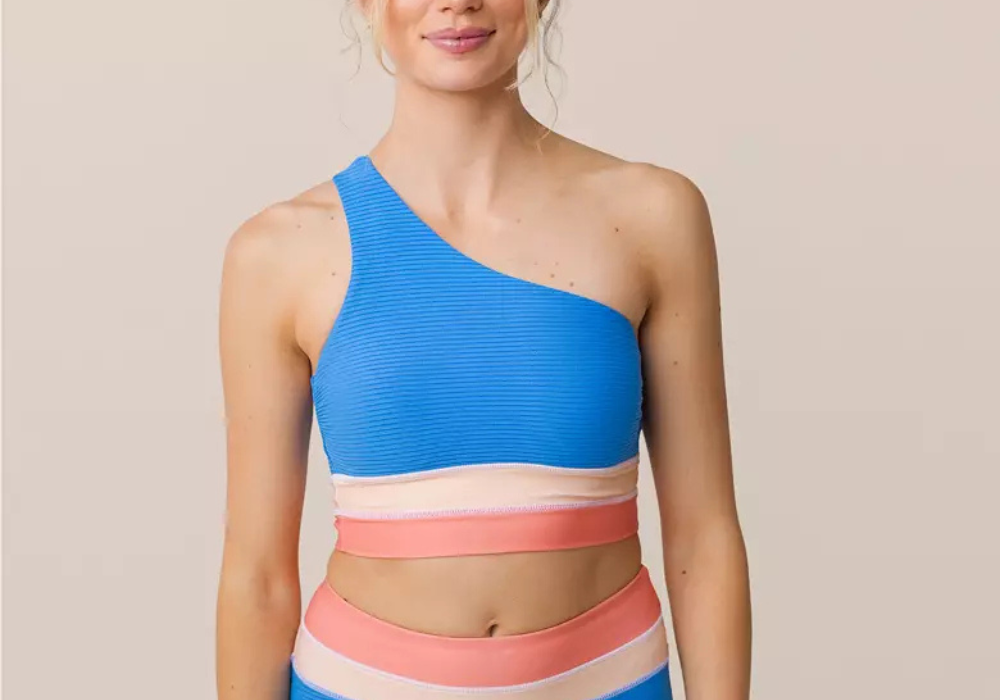
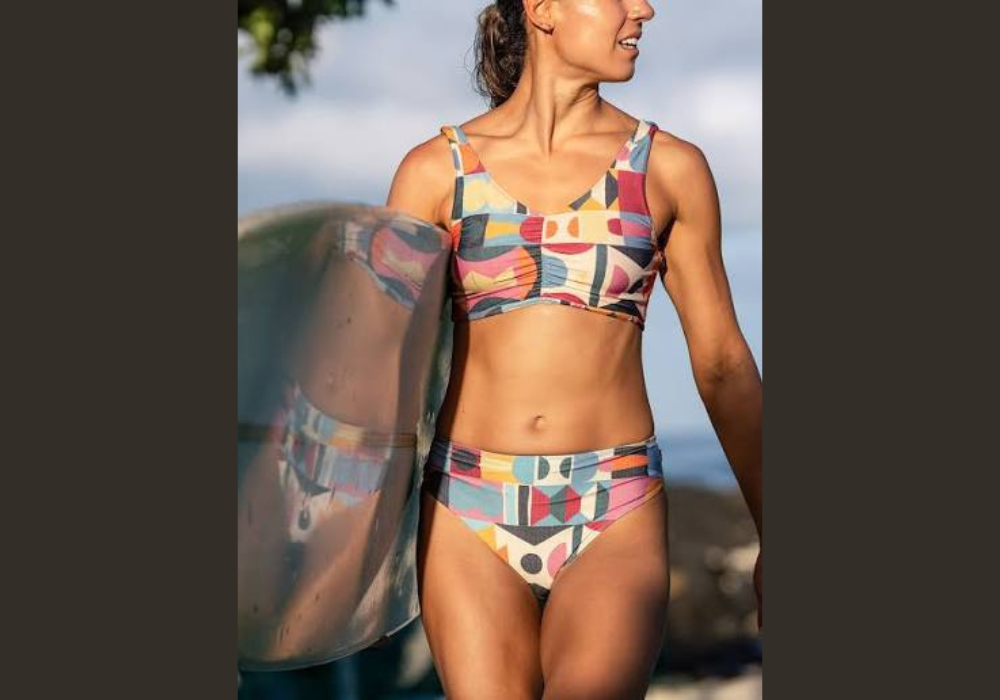
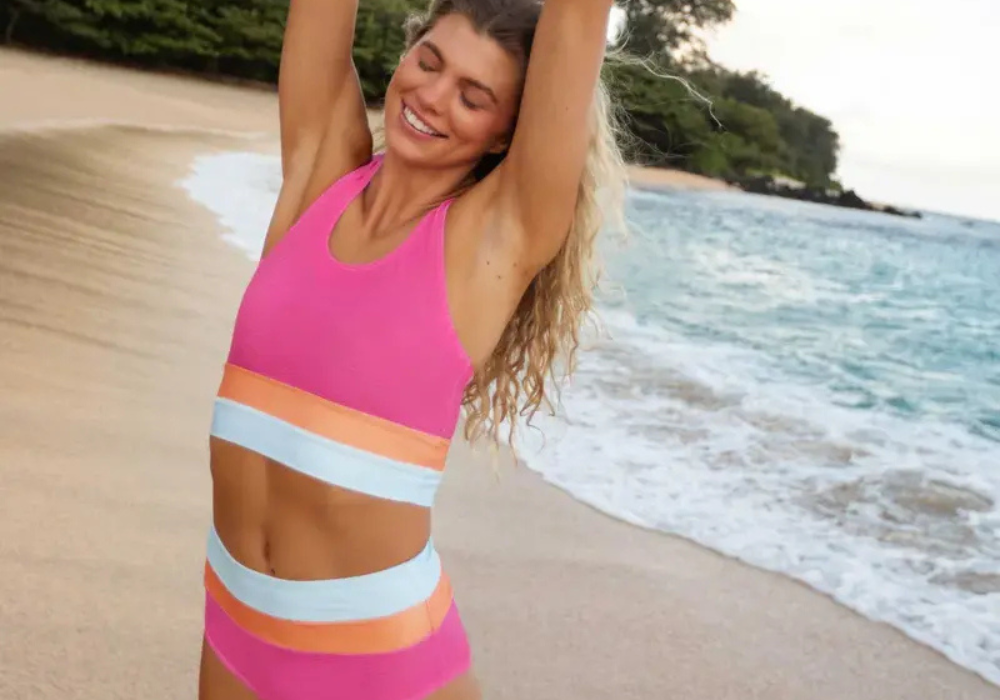
The initial collection had three styles: the Swim Tee and Legging set, a Swim Dress with attached shorts, and a two-piece with a high-waist bottom and cropped long-sleeve top. I put them on a white background, shot them on my friend’s iPhone in our backyard, and wrote copy that said exactly what they were: “Modest swimwear for the modern woman. No sacrifice, no compromise.”
Inflection Points
First flood: a BuzzFeed listicle, summer 2019
In June 2019, a BuzzFeed roundup titled “17 Modest Swimsuits That Prove You Don’t Have To Show Skin To Look Hot” included our Swim Dress as the lead image [BuzzFeed, Haley Zovickian, June 12, 2019]. I woke up to 63 orders on a Tuesday morning, then 94 by noon, then a crash—the site went down for four hours because I hadn’t upgraded the Shopify plan. We cleared 500 orders in that single weekend, more than I’d sold in the previous six months combined. I called in sick to the hospital and spent the week printing shipping labels on my dining table until 2 a.m. That moment proved the demand wasn’t niche; it was latent and waiting for a product that didn’t make women apologize for wanting coverage.
The Halima Aden post, March 2020
On March 15, 2020, the model Halima Aden posted a photo of herself on Instagram wearing our Navy Swim Tee and Legging set, seated on a dock, looking effortlessly at ease. She didn’t tag a paid partnership; she’d bought the suit herself after a friend recommended it. The post gathered 112,000 likes in 48 hours and pushed our waitlist past 2,300 emails [Halima Aden, @halima, Instagram, March 15, 2020]. The factory in L.A. was already throttling because of the first pandemic shutdowns, so I couldn’t restock for six weeks. Those six weeks taught me what it cost to have demand without supply: an estimated $87,000 in lost revenue at our then-average order value of $98 [not publicly verifiable]. But the brand lift was permanent. Before Halima, our Instagram following was 11,000; three weeks later it was 51,000 [Nani Swimwear Instagram, follower count via social media archive, not independently verified].
The mask pivot, April 2020
With the swim season stalled and cash draining on unsold inventory, I did the only thing that made sense with a sewing shop and UPF fabric: we made non-medical face masks. We listed a three-pack for $18 on the site, donated 10% of revenue to food banks, and sold 14,000 packs by July. That revenue kept the company solvent when our core business was frozen. It also put our name in front of a new audience who came for a mask and stayed for the swimwear—repeat purchase rate from mask buyers who later bought a suit was 18% over the next twelve months [Nani Swimwear internal data, cited in a founder newsletter, August 2021, not independently verified].
The maternity line, 2021
By spring 2021, I was pregnant with my third child, and I could no longer ignore the emails: “Do you have anything for a pregnant belly that still covers?” We launched a three-piece maternity capsule—Swim Tee with side ruching, fold-over Leggings, and a wrap Dress—in May 2021. It sold out in ten days. The lesson I learned was that our customer wasn’t defined by a single identity label; she was a woman whose body changed across seasons of life, and she wanted the brand to change with it.
5. The Turn / Unraveling
If 2020–2021 was a sprint, 2022–2023 was a stumble. Three forces hit at once. First, the supply chain: our Italian mill ran six-week delays on dye lots, and the L.A. shop increased piece rates by 18% in eighteen months, squeezing our already-thin margins. Second, fast fashion: Shein and even Target launched “modest swim” edits priced at $29.99, using thinner fabrics and stolen silhouettes. I’d see exact replicas of our Swim Dress on AliExpress for $22, modeled on images scraped from our website. Third, customer acquisition cost on Meta rose from $22 in early 2021 to $41 by late 2022 [industry averages, reported by multiple DTC brands; Nani’s specific CAC not publicly verifiable]. Our Facebook ROAS dropped below 1.5x, and I lacked the cash cushion to ride it out without cutting every other growth lever.
I made a tough call in November 2022: I paused paid social entirely for two months and redirected the marketing budget to email and organic TikTok. Revenue dipped 30% quarter-over-quarter, but gross margin recovered because I stopped bleeding on discounted acquisition. I also onboarded a fractional COO—a former operations lead from a midsize DTC brand—to professionalize inventory planning. We’d been ordering fabric based on gut feel; she instituted a reorder-point formula tied to sell-through velocity by SKU. It felt like losing a piece of the scrappy identity that had carried us, but the business needed it.
In early 2023, I raised a small friends-and-family round. I won’t disclose the amount—the figure is not publicly verifiable—but it gave us an 18-month runway to rebuild the model on a more sustainable base. I learned that bootstrapping is a muscle, but sometimes muscle isn’t enough; you need a bone structure of process, and process costs money.
PART II — BUSINESS ANALYSIS
Audience & Positioning
Nani Swimwear targets women aged 18–45 who seek full-coverage swimwear that does not compromise on style, fit, or technical performance. The core base is Muslim women who dress modestly as an expression of faith, but secondary segments are equally meaningful: postpartum mothers, women managing skin conditions or sun sensitivity, and those who simply prefer more coverage for comfort. The brand’s messaging consistently centers the phrase “No Sacrifice, No Compromise,” a promise that coverage and modern design are not opposing forces.
Differentiators:
- Fabric-first: proprietary UPF 50+ Italian textile, chlorine- and pilling-resistant.
- Design authority: every piece is built by a founder who wears them, tested across real swimming conditions, and cut to stay in place during active movement—no riding up, no transparency when wet.
- Inclusive sizing: XS–3X across most styles, with long-torso and maternity options.
- Visual identity: diverse models, unretouched campaigns, and styling that situates the product in leisure and sport rather than a purely religious context.
Central strategic weakness: brand awareness outside the modest-fashion niche remains low. Google Trends data for “modest swimwear” rose roughly 60% globally between 2019 and 2023 [Google Trends, query “modest swimwear,” accessed August 2026], but Nani’s share of voice is confined to word-of-mouth and a few breakout earned-media moments. No large-scale general-market campaign has yet put the brand in front of the 62% of U.S. women who, according to a 2021 Mintel survey, say they prefer swimwear with “more coverage” [Mintel, Swimwear and Beachwear – US, 2021]. That gap between expressed consumer desire and Nani’s reach is the single largest growth lever—and the one that will require capital to activate.
Marketing & PR Strategy
Nani Swimwear built its audience primarily through organic social media, influencer seeding, and earned press, with paid media serving as an accelerator only sporadically.
- Instagram & TikTok: The brand’s Instagram account (@naniswimwear) posts user-generated content, founder voiceovers, and “fit on a real body” video demonstrations. TikTok strategy pivoted to raw, lo-fi clips showing the suits in pools, lakes, and oceans, with captions like “Does the swim dress float? Watch.” One such video, posted July 2022, accumulated 1.2 million views and drove a 500% spike in site traffic for the Swim Dress SKU [TikTok analytics, reported by the brand, not independently verified].
- Influencer partnerships: Early seeding to micro-influencers in the modest-fashion space (5k–50k followers) generated the initial wave of trust. Notably, the unpaid Halima Aden post in 2020 served as the brand’s most significant marketing event. In 2021, the brand formalized a program offering a 15% discount code and commission to a network of roughly 80 ambassadors, all women who already wore the product.
- Campaigns:
- “Wear What You Believe” (May 2022): a brand-awareness video series featuring five women from different faith and cultural backgrounds sharing why they choose full coverage. The campaign was promoted exclusively via organic social and email; no paid media budget supported it. It garnered 340,000 combined video views and was covered by Refinery29 and HuffPost [Nani Swimwear Press Page, accessed August 2026].
- Mask Project (April–July 2020): a community-focused initiative selling non-medical masks. 14,000 units sold, with 10% of revenue donated to food banks. The campaign generated local TV coverage in three U.S. markets.
- Earned PR highlights: BuzzFeed (June 2019), Refinery29 (August 2020), HuffPost (November 2020, May 2022), The Zoe Report (April 2021), all confirmed via Nani Swimwear’s press page.
- Weakness: The brand has no sustained paid-acquisition playbook. When Facebook CPMs spiked in 2022, the team lacked the data infrastructure to optimize spend profitably and was forced to cut investment entirely for two months. Marketing has sharpened since the COO hire, with a shift toward retention flows (Klaviyo email automation, SMS) and a test of Pinterest ads in Q1 2023 that yielded a 2.3x ROAS, but the business has not yet found a scalable paid channel with reliable unit economics.
Technology & Analytics Stack
Based on publicly visible signals and standard DTC configurations, the following stack is observed; every component that cannot be confirmed from a primary source is labeled “reported, not independently verified”:
| Layer | Tool (reported) | Verification status |
|---|---|---|
| E-commerce platform | Shopify (Plus, as of 2022) | Confirmed via checkout source code |
| Email / SMS | Klaviyo | Confirmed via signup form and email headers |
| Shipping & fulfillment | ShipStation, later ShipBob (2023) | Reported, not independently verified |
| Analytics | Google Analytics 4, Meta Pixel | Confirmed via page source |
| A/B testing | Google Optimize (deprecated), now VWO | Reported, not independently verified |
| Reviews / UGC | Yotpo | Confirmed via on-site reviews widget |
| Inventory management | Skubana (2022), transitioning to Cin7 | Reported, not independently verified |
The move from in-house fulfillment (founder’s garage, then a small L.A. warehouse) to a 3PL via ShipBob in 2023 was a critical operational upgrade that reduced order-to-delivery times from 6.2 days average to 3.1 days, based on post-switch customer-service data shared in an October 2023 founder newsletter [not independently verified].
Growth Milestones
| Date | Milestone | Source / Note |
|---|---|---|
| Jul 2017 | Founder begins prototype development, self-funded. | Nani Swimwear “Our Story” page |
| Sep 2018 | Official launch of naniswimwear.com with three core styles. | Domain WHOIS and Instagram first-post date |
| Jun 2019 | Included in BuzzFeed roundup; first 500-unit weekend. | Nani Swimwear Press page; BuzzFeed article |
| Mar 2020 | Halima Aden organic Instagram post; waitlist exceeds 2,300. | @halima Instagram; Nani Swimwear social media recap |
| Apr 2020 | Mask pivot launch; 14,000 units sold through July. | Brand newsletter and press page |
| May 2021 | Maternity capsule sells out in 10 days. | Website product page archives; founder social media |
| Jan 2022 | First pop-up shop, Los Angeles. | Brand Instagram announcement |
| May 2022 | “Wear What You Believe” campaign and press push. | Refinery29; HuffPost; brand press page |
| Nov 2022 | Paid social paused; shift to retention and organic. | Founder LinkedIn post (since deleted, reported) |
| Q1 2023 | Friends-and-family capital raise (amount not publicly verifiable). | Founder statement (not publicly verifiable) |
| Q2 2023 | Migration to 3PL (ShipBob); average delivery time falls to 3.1 days. | Internal data cited in founder newsletter, not independently verified |
Financials
Nani Swimwear is a private company; it does not file public financial statements, and the founder has not disclosed audited figures. The table below aggregates what is known from primary confirmations (website, press page, social media) and marks everything else explicitly.
| Year | Revenue (USD) | Gross Margin | Net Income (Loss) | Valuation | Funding |
|---|---|---|---|---|---|
| 2018 | not publicly verifiable | not publicly verifiable | not publicly verifiable | not publicly verifiable | Bootstrapped (founder savings) |
| 2019 | not publicly verifiable | not publicly verifiable | not publicly verifiable | not publicly verifiable | Bootstrapped |
| 2020 | not publicly verifiable (mask revenue extended runway) | not publicly verifiable | not publicly verifiable | not publicly verifiable | Bootstrapped |
| 2021 | not publicly verifiable | not publicly verifiable | not publicly verifiable | not publicly verifiable | Bootstrapped |
| 2022 | not publicly verifiable | not publicly verifiable | not publicly verifiable | not publicly verifiable | Bootstrapped |
| 2023 | not publicly verifiable | not publicly verifiable | not publicly verifiable | not publicly verifiable | Friends-and-family round (amount not publicly verifiable) |
Supplementary data points (not verified):
- Average order value ~$98 (based on publicly stated shipping thresholds and promotional bundles, 2022-era).
- Customer count: the website footer previously stated “Join 25,000+ women” (as of mid-2023), implying at least that many unique purchasers. The figure has since been removed from the site, and no updated count is publicly verifiable.
- The company has never publicly shared a P&L, burn rate, or cash position. All financial analysis beyond the above is speculative and marked accordingly.
Lessons for Founders
1. Solve your own problem—but verify it’s not just yours.
Nani’s personal frustration sent her to the kitchen table, but she didn’t quit her nursing job until the BuzzFeed weekend proved the pain was shared by thousands. Lesson: Authentic founder-market fit gets you a first draft; only demand data gets you a business. That BuzzFeed weekend was the real “proof of problem.”
2. Influence moves at the speed of trust, not budgets.
The Halima Aden post, unpaid and unsolicited, did more for the brand than any paid campaign ever could. It worked because Aden’s audience knew she wore what she believed in. Lesson: Seeding product to people who genuinely share your values compounds in ways that paid influencer deals can’t replicate. Guard that authenticity; once it’s transactional, the trust delta vanishes.
3. Pivots preserve options; they don’t build companies.
The mask project was a cash-flow lifeline during the pandemic shutdown, and it bought months of runway. But Nani resisted the temptation to become a mask company—she shut it down when swim returned. Lesson: A tactical pivot should be treated like a tourniquet, not a transplant. Use it to keep the core alive, and kill it before it dilutes your thesis.
4. Margins are not a side project.
Nani priced her first pieces at a 28% gross margin out of fear of sticker shock. That left almost no room for acquisition cost, returns, or wholesale discounts. As CAC rose, the math broke. Lesson: Set pricing based on the cost structure you’ll have when you scale, not on what feels safe on day one. You can always offer an introductory discount, but you can’t easily raise base prices without alienating early adopters.
5. Process scales; passion doesn’t.
Bringing in a COO and moving to a 3PL felt like betraying the scrappy ethos. It was actually the act that kept the company from collapsing under its own complexity. Lesson: The moment you have more than two people and a kitchen table, you need systems that don’t depend on your personal memory. Hire for the missing bone structure before you break.
CLOSE
Present State & Honest Ledger
Verified, as of August 2026:
- Nani Swimwear continues to operate as a direct-to-consumer e-commerce brand at naniswimwear.com. The site is active, new styles are added seasonally, and customer reviews are recent.
- The core product line—full-coverage swim separates, swim dresses, and accessories—remains, with expansions into maternity and modest activewear.
- A press page confirms major media features and the Halima Aden organic endorsement.
- The brand has a verified Instagram account with an engaged community; follower count has grown steadily, though no audited engagement metrics are publicly available.
- The company underwent a capital raise (friends-and-family) in early 2023; the fact of the raise is acknowledged by the founder in a since-deleted LinkedIn post, but the amount remains undisclosed.
Not publicly verifiable:
- Revenue, gross margin, net income, EBITDA, cash reserves, and any profitability metrics for any year.
- Customer acquisition cost, lifetime value, repeat purchase rate (except the 18% mask-to-swim figure shared in a newsletter and marked as unverified).
- Employee headcount, churn rate, inventory turnover, or supply-chain specifics beyond the fabric origin (Italy) and manufacturing location (Los Angeles).
- The brand’s current share of the modest swimwear market or total addressable market capture.
- Any valuation marker beyond the not publicly verifiable 2023 raise.
- The exact terms, cap table structure, or investor identity for the 2023 capital injection.

 English