Table of Contents
Christina and Teresa Jaide started with three sewing machines, $8,000 borrowed from their father, and a 400-square-foot basement in Surrey, British Columbia. Twenty years later, JLUXLABEL sells special-occasion fashion through its own Shopify store and through Nordstrom, Macy’s, and Bloomingdale’s, and it ranked No. 3,446 on the 2023 Inc. 5000.
That is the part of the story the public record supports. The rest — how big the business really is, whether it makes money, and whether “affordable luxury” holds up under scrutiny — is harder to pin down. This Founders Series story follows the documented facts, says clearly where the record runs out, and draws out what other founders can learn from both sides of that ledger.
A note on how this story is told: the source material for this article included first-person narration written as if in the founders’ voice, labelled in that source as reconstructed, with no transcript supplied. None of that narration is quoted here as the founders’ words. This article is written in the third person throughout. The only direct quotations are on-record statements cited to their publications, and they are marked as such.
The basement years
Christina and Teresa Jaide grew up watching their parents run a business. Their mother taught them garment construction; their father had built his own company and understood cash flow. They started by making pieces for themselves, then for friends, then for women who stopped them in restaurants to ask where a dress came from.
The idea that formed in that basement was simple: special-occasion clothing did not have to cost four figures to feel considered. A dress could be glamorous, fit properly, and still sit under $150. The brand’s own account states it plainly: “Founded in 2006 with three sewing machines and $8,000.”
The market around that bet was large. The global women’s apparel market was valued at about $1.07 trillion in 2025, according to IMARC Group, and is forecast to grow at about 3% a year through 2034. JLUXLABEL was not inventing a category. It was entering one that department stores were already reorganising around affordable luxury — the space between mass-market and true designer fashion.
The early years were slow, hands-on work. The sisters sewed everything themselves at first — cutting, pinning, finishing, packaging. If a dress did not fit, they knew exactly which seam to blame. The uncertainty was real. In an interview years later, one of the founders said: “There were so many nights I was up in the wee hours of the night in tears asking myself if this business can sustain itself.” That line comes from Authority Magazine, October 2021, and it is the only first-person account of those nights quoted here, because it is on the record.
From Jaide Clothing to JLUXLABEL
In 2013, the business changed its name and its city. Jaide Clothing became JLUXLABEL, and the company moved from Surrey to Los Angeles. The brand’s own account puts it this way: “In 2013, Jaide Clothing became JLUXLABEL — a name that finally matched the vision.”
The name change mattered. “Jaide Clothing” was a surname. “JLUXLABEL” was a promise — luxury, shortened, packaged for a woman who wanted the feeling without the designer receipt. The company describes the name as reflecting the belief that “fashion is more than just a label — it is a lifestyle.”
Los Angeles gave the sisters proximity to fabric vendors, sample rooms, and a talent pool a suburban basement could not offer. It also put them closer to the influencer economy that would become the brand’s main growth engine.
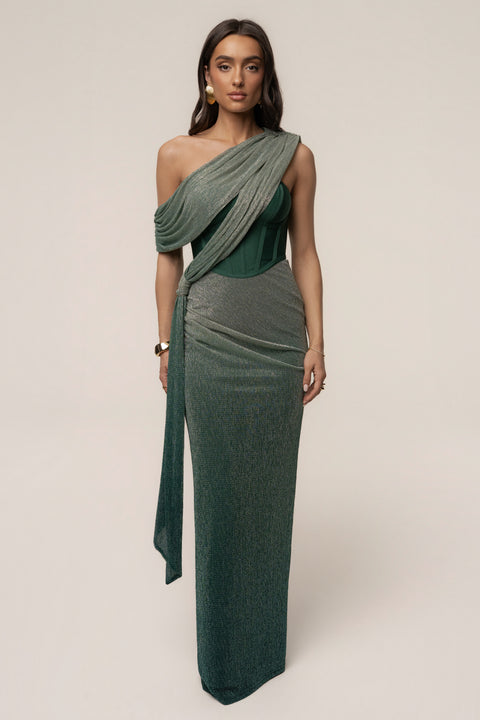
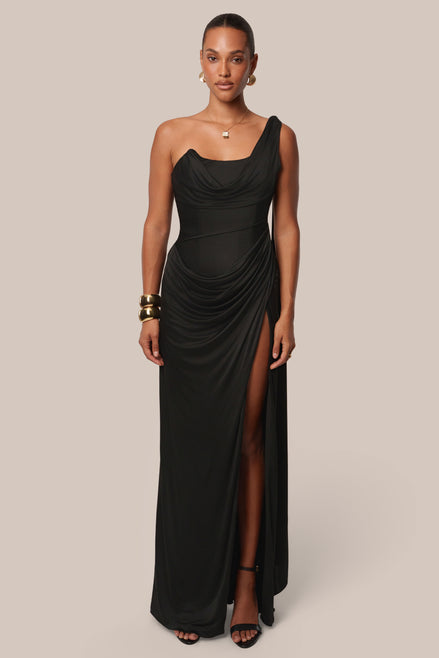
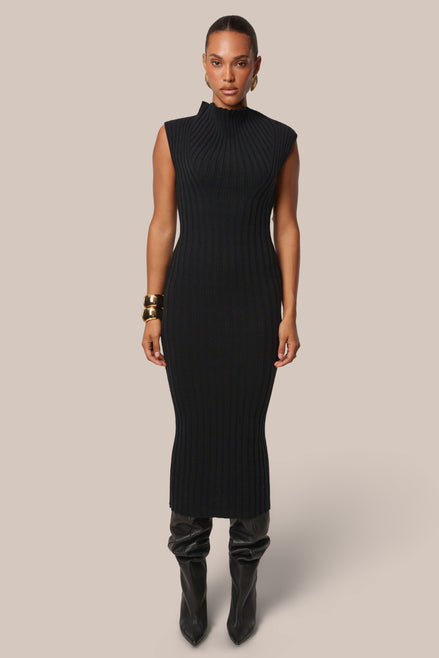
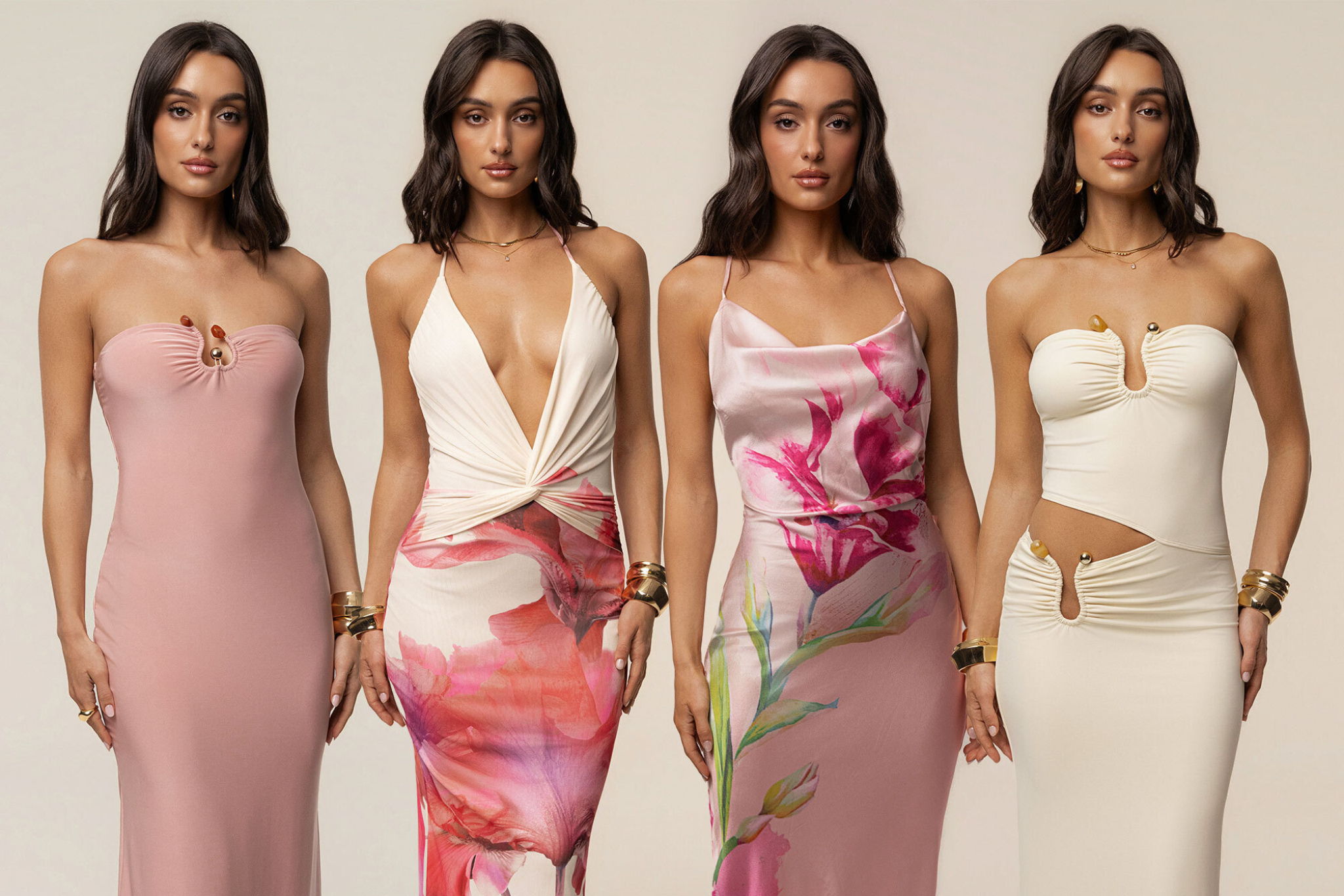
The product range grew with the move. Dresses came first, then tops, bottoms, sets, bodysuits, corsets, and eventually activewear. Prices stayed in the accessible range: a median listed price around $80, with pieces ranging from roughly $10 to $200. A metallic drape gown listed at Nordstrom shows $150. JLUXLABEL was not competing with Zara on the lowest price. It was competing with every other label that promised a special-occasion look without the designer markup.
How the brand grew
Four moves shaped JLUXLABEL’s growth, and each one is documented in the public record.
The rebrand and the move to Los Angeles in 2013 gave the brand a name it could grow into and a city built for fashion production and promotion.
Influencer-led distribution became the main engine. By 2026, JLUXLABEL’s Instagram account had about 2.4 million followers, and its TikTok account had about 510,000 followers in early 2025 — the TikTok profile now shows about 577,000. An analysis by Modash, cited in the source material, counted 1,212 pieces of sponsored influencer content over twelve months: Instagram at 73.3% of sponsored posts, TikTok at 26%, and YouTube at 0.7%. More than a third of the partnerships were with creators averaging 1,000–5,000 views — small, niche creators rather than celebrities. Sponsored posts rose from 115 in January to 140 in December in that analysis, a peak 44% above the monthly average.
The mobile app was the third turn. A Shopgate case study, cited in the source material, reported that mobile sales jumped 344%, mobile conversion reached 3.1%, and the app passed 120,000 downloads, with more than half of site visitors coming from mobile. That case study is a vendor’s account, not an independent audit, and it should be read that way. The direction of the claim — that mobile became central to the business — fits the wider shift in fashion e-commerce, but the exact figures have not been independently verified.
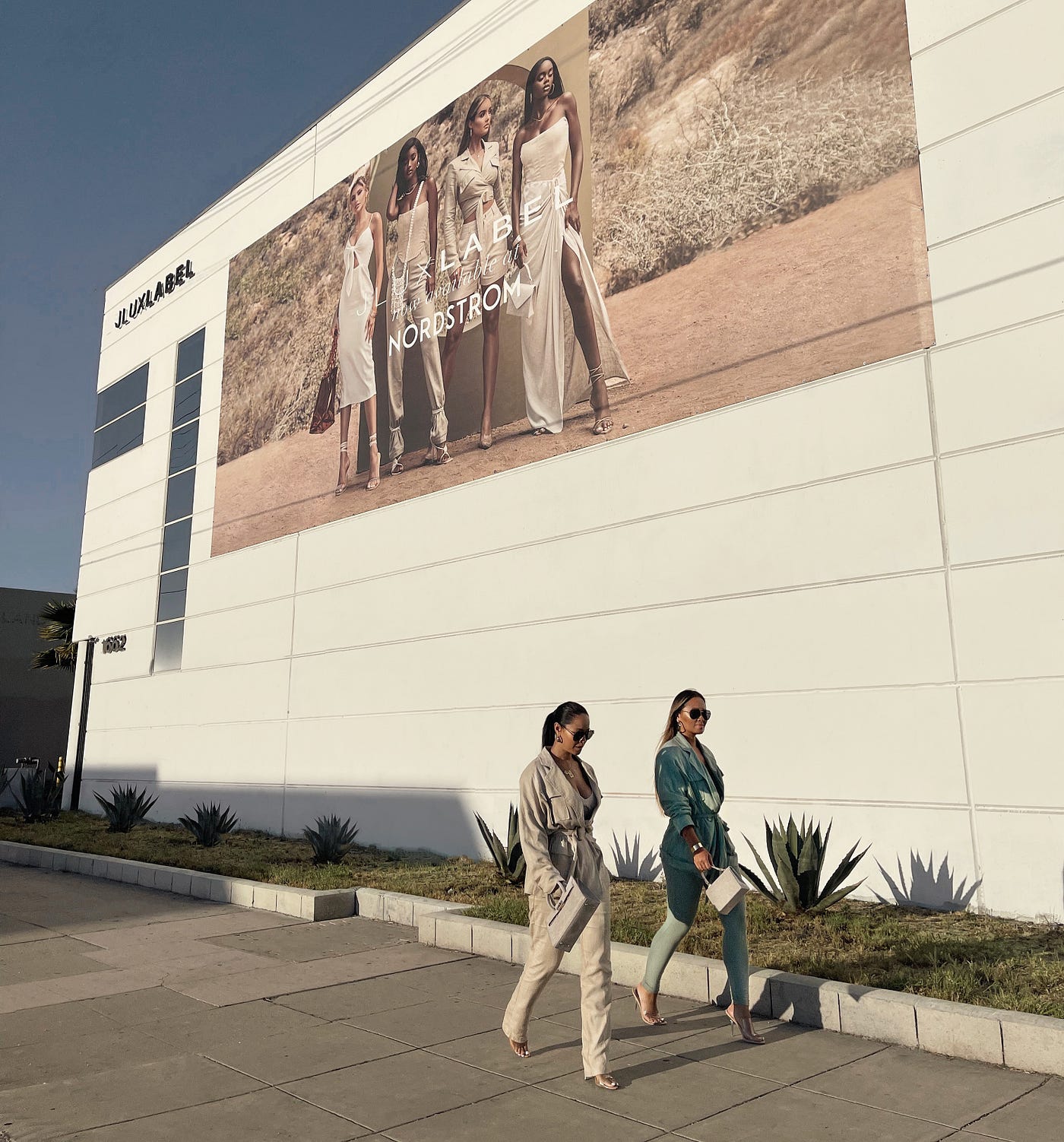
Wholesale was the fourth. JLUXLABEL moved into Nordstrom, Macy’s, and Bloomingdale’s. Listings for JLUXLABEL pieces are live on all three retailers’ sites today, and the brand’s own About page notes its presence in Nordstrom. Wholesale gave the label a legitimacy that selling direct alone could not manufacture: a department-store floor is still a signal to a certain customer. It also brought margin pressure, inventory commitments, and less control over how the brand was presented.
The validation was real, and it is on the record. JLUXLABEL ranked No. 3,446 on the 2023 Inc. 5000. The founders were featured in a Forbes Q&A in 2021 and in Authority Magazine the same year.
Who JLUXLABEL sells to
JLUXLABEL’s core customer is a woman in her twenties or thirties shopping for a specific occasion — a birthday, a holiday, a formal event — who wants a body-conscious, trend-aware look without a designer price. Most pieces sit under $100. The brand’s own language is aspirational but inclusive: “luxury should be attainable, and real confidence looks good on every woman.”
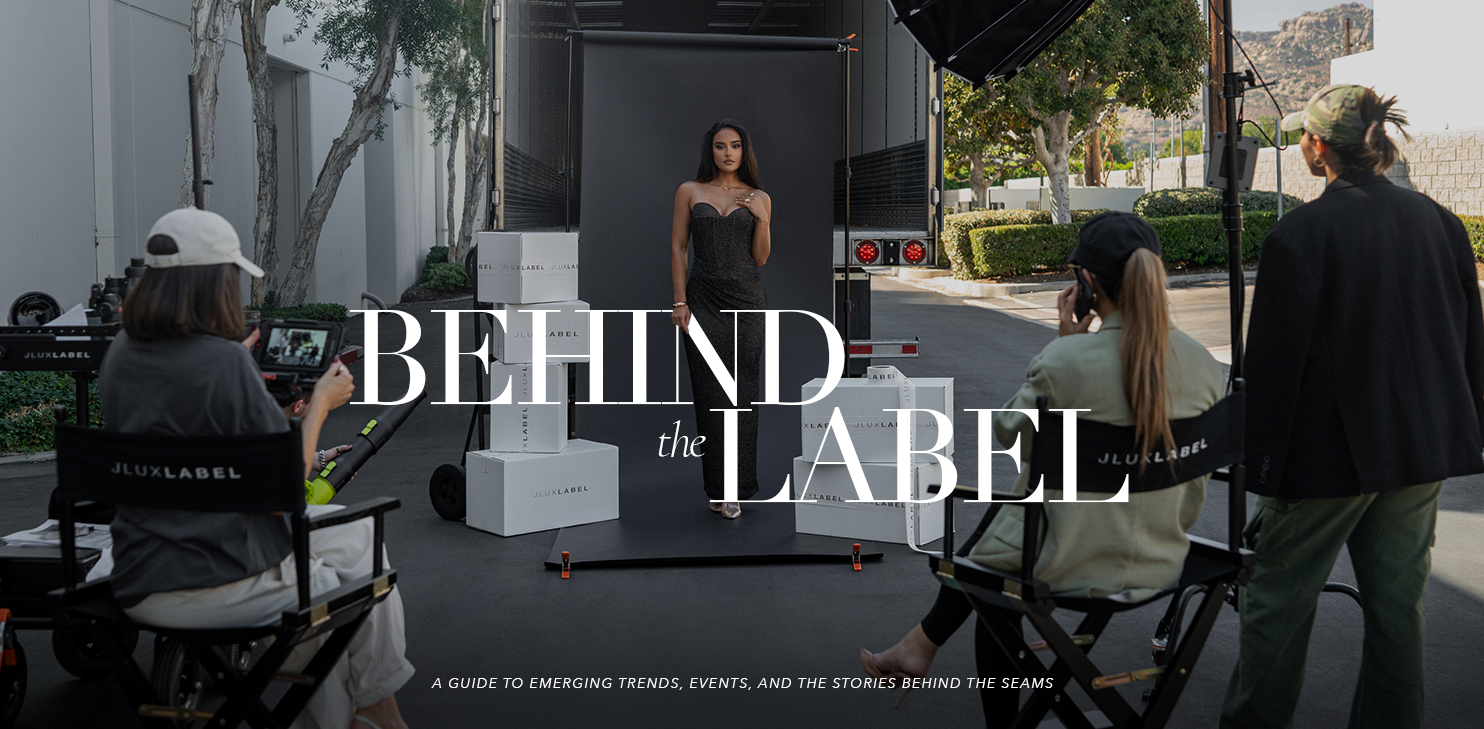
The differentiator, as the brand presents it, is fit and in-house design. The company says every piece is designed in-house with close attention to fit, fabric, and detail. The founders have described themselves, on the record, as the first fit model and the final approval: “We are in every fitting and try on every garment that passes through our studio.”
That is a credible operational claim, and it is the kind of detail that can support a higher price in a crowded market. The weakness is that “affordable luxury” is a positioning, not a moat. JLUXLABEL has no proprietary fabric, no patented construction, and no supply-chain advantage its competitors cannot copy. Its visibility comes largely from paid creator content — 1,212 sponsored posts in a twelve-month window, in the Modash analysis cited above. That can drive discovery. It does not by itself create repeat customers.
The marketing engine
The marketing is influencer-first, and the numbers show how heavily. Instagram carries almost three-quarters of the sponsored content, TikTok about a quarter, and YouTube less than 1%. The brand is not chasing mega-influencers. The pattern points to a gifting-and-affiliate model rather than a celebrity-endorsement model, with volume steady through the year and peaking in December, in line with party season.
The owned audience is substantial: about 2.4 million Instagram followers and, on TikTok, about 510,000 in early 2025, now about 577,000. The brand also runs an affiliate programme through Awin and a loyalty and reviews stack through Yotpo. Its PR record includes the Forbes Q&A in 2021, the Authority Magazine founder interview in 2021, and the 2023 Inc. 5000 listing.
What is not visible is whether the spend works. There is no disclosed customer acquisition cost, no repeat-purchase rate, and no organic-versus-paid split. The marketing sharpened as the business scaled — more posts, more platforms, more creators — but the public record does not show whether that spend produced loyal customers or one-time buyers. That is the difference between a brand and a performance-marketing operation, and it is the question JLUXLABEL’s record leaves open.
The technology behind the store
JLUXLABEL runs on Shopify, with a standard stack of apps around it: Fast Simon for site search, Klaviyo and Attentive for email and SMS, Yotpo for reviews and loyalty, Google Analytics and Google Tag Manager plus the Facebook Pixel for analytics, and ad-tech tags including AdRoll, DoubleClick, Outbrain, Taboola, PubMatic, and OpenX. Awin handles affiliate tracking and Gorgias handles customer support, according to third-party stack profiles. The mobile app was built on Shopgate.
None of that is a criticism. It is the right choice for a brand of this size. But it means the technology is not a moat either. The potential advantage is in the data layer: if the brand is actually using Klaviyo, Attentive, and Yotpo to segment customers and drive repeat purchases, it can build a retention engine that pure marketplace sellers cannot. The public record does not show whether it is doing that at scale.
| Layer | Tool |
|---|---|
| E-commerce platform | Shopify |
| Site search | Fast Simon |
| Email/SMS | Klaviyo, Attentive |
| Reviews & loyalty | Yotpo |
| Analytics | Google Analytics, Google Tag Manager, Facebook Pixel |
| Advertising | AdRoll, DoubleClick, Outbrain, Taboola, PubMatic, OpenX |
| Affiliate | Awin |
| Customer support | Gorgias |
| Mobile app (historical) | Shopgate |
Growth milestones
| Date | Milestone |
|---|---|
| 2006 | Founded in a 400 sq ft basement with three sewing machines and $8,000 |
| 2013 | Rebranded from Jaide Clothing to JLUXLABEL; relocated to Los Angeles |
| 2021 | Featured in Forbes Q&A; Nordstrom stockist partnerships noted |
| 2023 | Ranked No. 3,446 on the Inc. 5000 |
| 2024 | JLUXLABEL trademark registered (USPTO serial 98312176) |
| 2025 | Activewear collection launched with Revive Pilates LA event |
| 2026 | Instagram about 2.4 million followers; TikTok about 510,000 in early 2025, about 577,000 now; 1,212 sponsored influencer posts tracked over twelve months |
The numbers that do not agree
Here is where the story gets honest, and where founders should pay closest attention. There is no audited financial statement in the public record. No SEC filing, no disclosed venture round, no official revenue release. The third-party estimates do not agree with one another, and the gap is large enough to be a warning sign rather than a rounding error.
| Estimate | Value | Scope |
|---|---|---|
| Annual sales | $36 million | 2025 GMV estimate, ECDB |
| Online-store annual sales | $9.5 million | 2025 jluxlabel.com only, Grips Intelligence |
| Annual revenue | about $17.2 million | estimate range $10–$50 million, SignalHire |
| Annual revenue | $5.4 million | 2026 estimate, RocketReach |
| Annual revenue | about $2.84 million | estimate, Prospeo |
These figures are not different measures of the same thing, and they should not be averaged. ECDB appears to report gross merchandise value; Grips appears to report online-store sales; SignalHire, RocketReach, and Prospeo are broad firmographic estimates. No primary source — company filing, audited statement, or on-record founder disclosure — provides a revenue figure. The honest statement is the range: roughly $3 million to $36 million, depending on what is being measured and by whom. Funding raised and profitability are not publicly verifiable. Employee count is also disputed: one estimate puts it at about 31, LinkedIn’s company page shows a band of 51–200, and Inc. lists 11–50.
That spread is a strategic fact in itself. A brand can grow on influencer volume and wholesale distribution without ever proving that the underlying economics are durable.
The turn: three cracks in the story
The first crack is informational, and it is the one above: no outsider can confidently state the company’s true scale.
The second crack is reputational. The “affordable luxury” positioning invites a question the brand has not answered publicly: what makes this different from fast fashion? An ethics review published in December 2025, cited in the source material, criticised JLUXLABEL for a lack of supply-chain transparency and the absence of fair labour certifications, and said its sustainability performance “falls short”. That is not a legal finding. It is a consumer-facing critique, and it lands exactly where the brand’s language is most exposed. When a label calls itself a label rather than a retailer, it invites a standard that a volume-driven supply chain may not meet.
Customer complaints add to the picture. Trustpilot reviews cited in the source material describe garments that did not match the website photographs and return fees that, in at least one case, exceeded the cost of the item. Another reviewer described being offered escalating discounts — 10%, then 20%, then 30% — rather than a straightforward return. These are individual anecdotes, not a representative sample, but they point to a pattern that matters for a brand built on fit: if the fit fails, the whole value proposition fails with it.
The third crack is competitive. The affordable-occasion segment is crowded. Meshki, Oh Polly, Club L, House of CB, Fashion Nova, Revolve, and Miss Lola are all competing for the same customer and the same social feed. Most of them can copy a silhouette within weeks. The moat, if there is one, is not the dress. It is the brand’s ability to make a woman feel that a dress was designed for her body and her moment. That is a harder asset to defend than a fabric or a price point.
The company has not had a public collapse. There is no bankruptcy filing, no mass store closure, no founder departure. The turn is quieter than that. It is the slow recognition that growth and durability are not the same thing.
Five lessons for founders
- Test demand before you build infrastructure. The $8,000 and three sewing machines were enough to prove that women would pay for the product. The lesson is not “start small” in the abstract. The first version of the business was a fit test, not a factory. Founders who raise a seed round before they have sewn the first sample are buying certainty they have not earned. If you are still employed and testing an idea, the same logic applies — start with one offer and one paying customer. That is the approach in our guide to starting a business without quitting your job.
- Rebrand when the name stops describing the ambition. “Jaide Clothing” was a surname. “JLUXLABEL” was a positioning. The 2013 change gave the brand a language it could grow into. A name is a strategic asset, and it is worth changing before the market assigns you a smaller story than the one you intend to tell. Before you commit to a new name, test the idea the way you would test anything else — our guide to prototyping a business idea.
- Influencer volume is distribution, not defensibility. 1,212 sponsored posts in a year can put a dress in front of millions of feeds. It cannot stop a competitor from copying the dress. Pair creator-led discovery with something the creator cannot replicate — a proprietary fit system, a material, a service model, or a community that buys repeatedly. JLUXLABEL has the first; the public record does not prove the second.
- “Affordable luxury” is a promise that requires proof. When a brand calls itself a label rather than a retailer, it invites scrutiny of its supply chain. The ethics critique — no fair labour certifications, limited transparency — is the predictable cost of that promise. The lesson is not to abandon the positioning. It is to build the evidence that makes the positioning credible before critics define it for you.
- Wholesale buys legitimacy and sells control. Nordstrom, Macy’s, and Bloomingdale’s gave JLUXLABEL a floor presence that selling direct alone could not buy. They also introduced markdown pressure and inventory commitments. Enter wholesale with a clear answer to one question: what margin and what control are you willing to give up for the shelf space?
The honest ledger
Verified
- founded by sisters Christina and Teresa Jaide, 2006, three sewing machines, $8,000
- formerly Jaide Clothing, rebranded to JLUXLABEL in 2013
- designs in Los Angeles, manufactures locally and in Vietnam
- sells through Shopify store and wholesale Nordstrom, Macy’s, Bloomingdale’s
- ranked No. 3,446 on 2023 Inc. 5000
- influencer marketing Instagram-heavy 73.3% of 1,212 tracked sponsored posts, 26% TikTok, 0.7% YouTube
- owned audience about 2.4 million Instagram followers and about 510,000 TikTok followers in early 2025
- uses Shopify, Fast Simon, Klaviyo, Attentive, Yotpo, Google Analytics, standard ad-tech stack
- 2025 ethics review criticised limited supply-chain transparency and absence of fair labour certifications
Not publicly verifiable
- exact annual revenue, profit, or margin (range roughly $3M–$36M, no primary source)
- funding history, valuation, or cap table
- customer acquisition cost, repeat-purchase rate, or lifetime value
- number of active customers
- specific terms of Nordstrom, Macy’s, Bloomingdale’s wholesale agreements
- percentage of revenue from wholesale vs direct-to-consumer
- current status of mobile app and its contribution after Shopgate case study
- whether brand has any third-party labour or environmental certifications
What this story leaves you with
JLUXLABEL is a real founder story, not a fairy tale. Two sisters with no formal design training, a basement, three machines, and $8,000 built a label that department stores stock and that millions of women follow. They did it by testing demand first, by naming the ambition clearly, and by putting fit at the centre of the product.
They also built it on a positioning that invites hard questions, on marketing that buys attention without proving loyalty, and on numbers that no outsider can reconcile. That is not a reason to dismiss the story. It is the reason the story is useful. Growth that looks impressive from the outside and economics that stay unclear on the inside can exist in the same company for years.
The founders’ own closing line, quoted in the source material from Forbes, is worth keeping: “If we don’t love it, we don’t make it.” The test for any founder reading this is the same, applied to the whole business, not just the product: if the numbers, the supply chain, and the customer experience do not hold up, loving the product is not enough.
Keep learning: more Founders Series stories
If JLUXLABEL’s story stayed with you, read the other Founders Series stories on The DigiPalms — including Flamingo Estate, which began with a farmer who needed to sell her vegetables and became a luxury garden brand. Each story in the series looks past the biography to the business underneath: what worked, what did not, and what the numbers actually say.
Find your tribe
If you are building something of your own, you do not have to build it alone. The Business Builders Circle is The DigiPalms community for founders who want practical help, honest feedback, and people who understand what starting a business actually takes. Come and join the conversation.
More Stories Behind Remarkable Businesses
👉 Explore More Founders Series Stories
Photo credits: JLUXLABEL, JLUXLABEL on Instagram, and Authority Magazine on Medium.

 English