Table of Contents
The Flamingo Estate business strategy began with a problem that had nothing to do with luxury: a farmer who needed to sell her vegetables.
The parking lot smelled like cardboard and cilantro. I was standing next to Aaron, my partner and the creative director of everything we make, and a farmer named Dani, who had tears in her eyes because the restaurants that bought her vegetables had closed in a single week. We had borrowed a hand truck from the bookstore. We had a stack of flat-packed boxes printed with a flamingo. We thought we might sell twenty-five. [reconstructed]
We sold a hundred. The next week, three hundred. We hired drivers. We filled a warehouse. One farm became ten, then a hundred and fifty CNBC, Aug. 6, 2025. I had spent two decades building campaigns for Hermès and Cartier, and I had never seen a number move like that. Not because we were clever. Because people needed vegetables, and we had a way to get them there. [reconstructed]
That was March 2020. I did not know then that the boxes would become a candle company, and the candle company would become a garden that sells luxury.
Origin & thesis
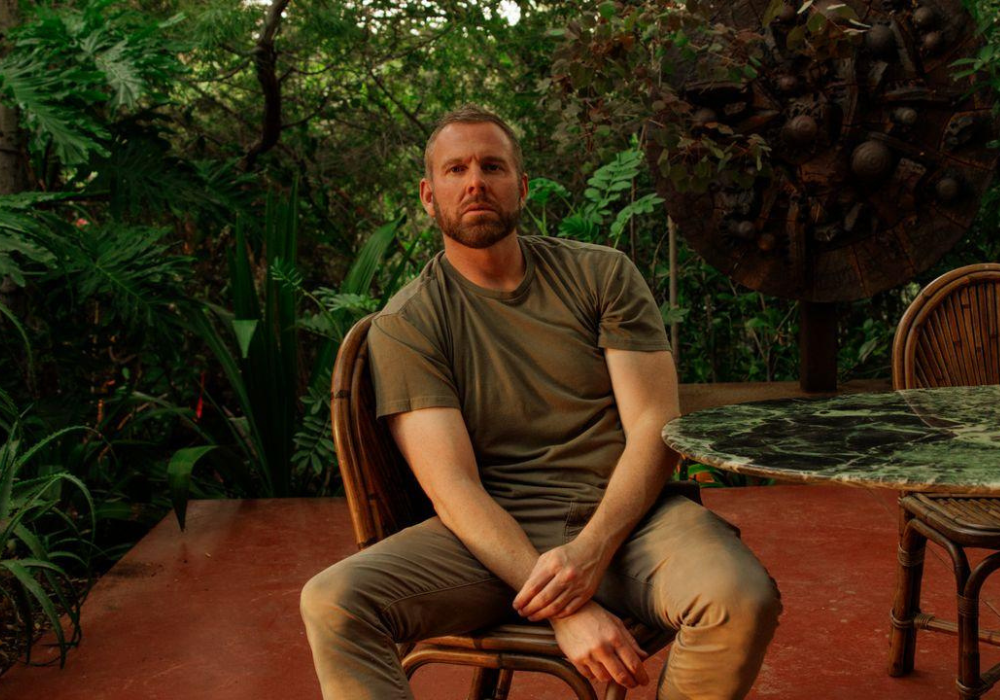
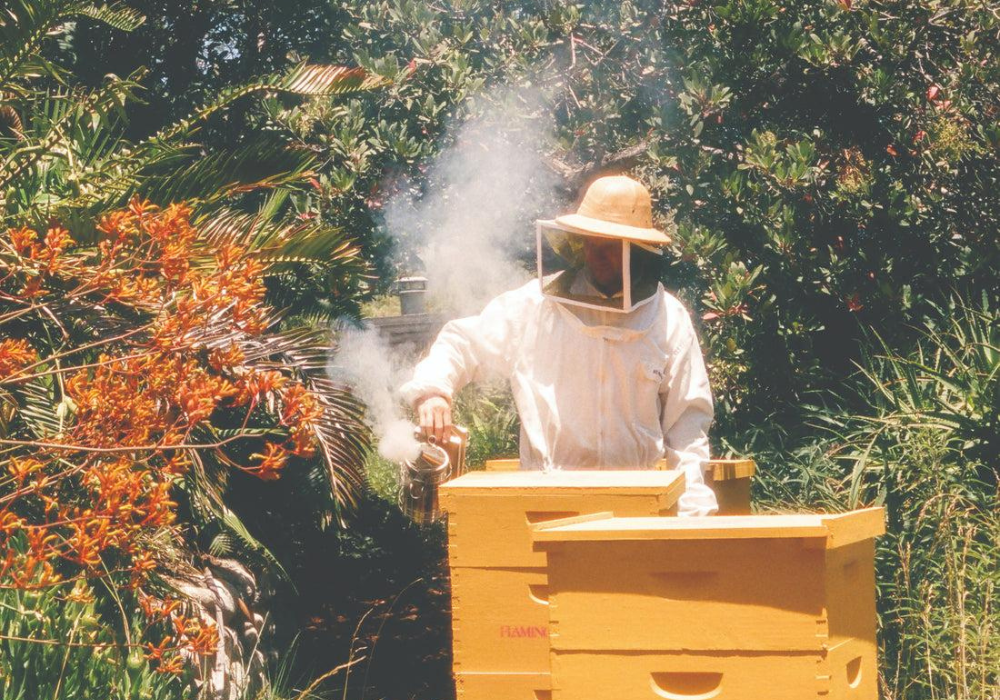
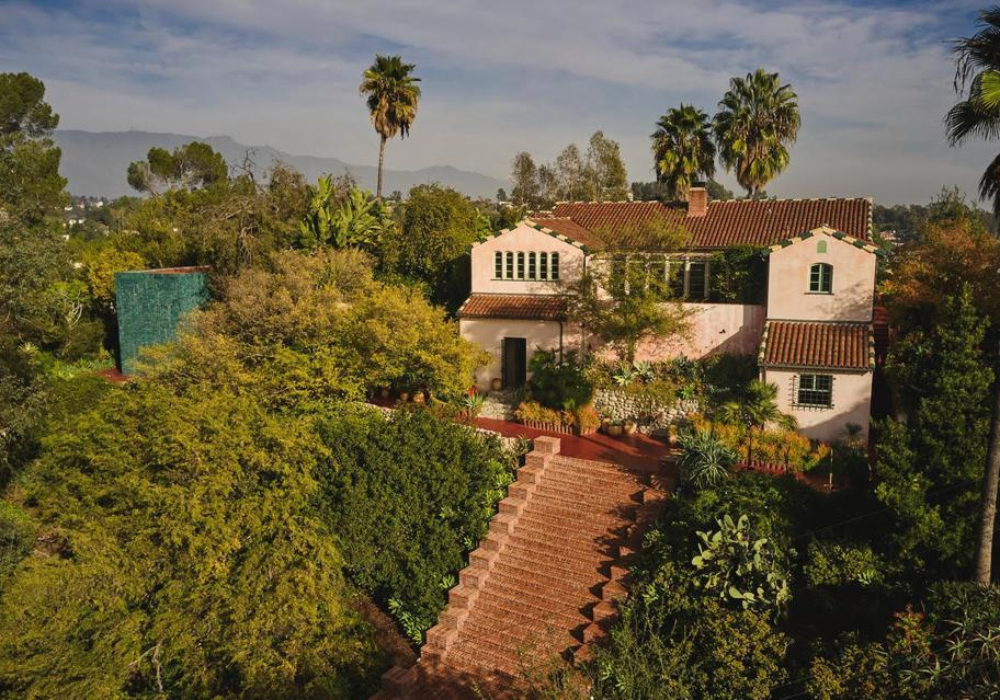
I grew up on a farm in rural Australia. Both of my parents were farmers. I know what it feels like to lose a farm; mine lost theirs when I was in high school Shopify, Apr. 7, 2026. I left that life for law school, then London agencies, then New York, where I founded Chandelier Creative and spent roughly twenty years making campaigns for Hermès, Cartier, Nike, and Calvin Klein CNBC Events, accessed April 2026. In 2013 I bought a ruined seven-acre property on a hill in northeast Los Angeles—a 1940s Spanish Revival house that had been a goat farm, an artist commune, and, for sixty-five years, a porn studio Wikipedia, accessed April 2026; LA Weekly, July 30, 2024. I spent years planting the garden. It was a pleasure project, not a business plan.
Then the pandemic closed the agency’s work, and the garden became the only thing with a pulse. “There was a real joy to this work, which I hadn’t felt for a long time,” I said later. “There was a cause and effect” verbatim, Business of Home, Apr. 7, 2025. The thesis was not “sustainability.” It was that agriculture could be treated like a luxury house. “Mother Nature is the last great luxury house,” I told CNBC verbatim, CNBC, Aug. 6, 2025. The market was already moving that way. The global luxury candle market was valued at roughly $603 million in 2024 and projected to grow at about 12% a year through 2030 [Research and Markets, accessed April 2026](https://www.researchandmarkets.com/reports/6097835/luxury-candle-market-size-share-trends-analysis). The broader candle market was about $10.45 billion in 2024, growing at a slower 4% GlobeNewswire / Research and Markets, Feb. 17, 2026. The premium end was where the margin lived.
The build
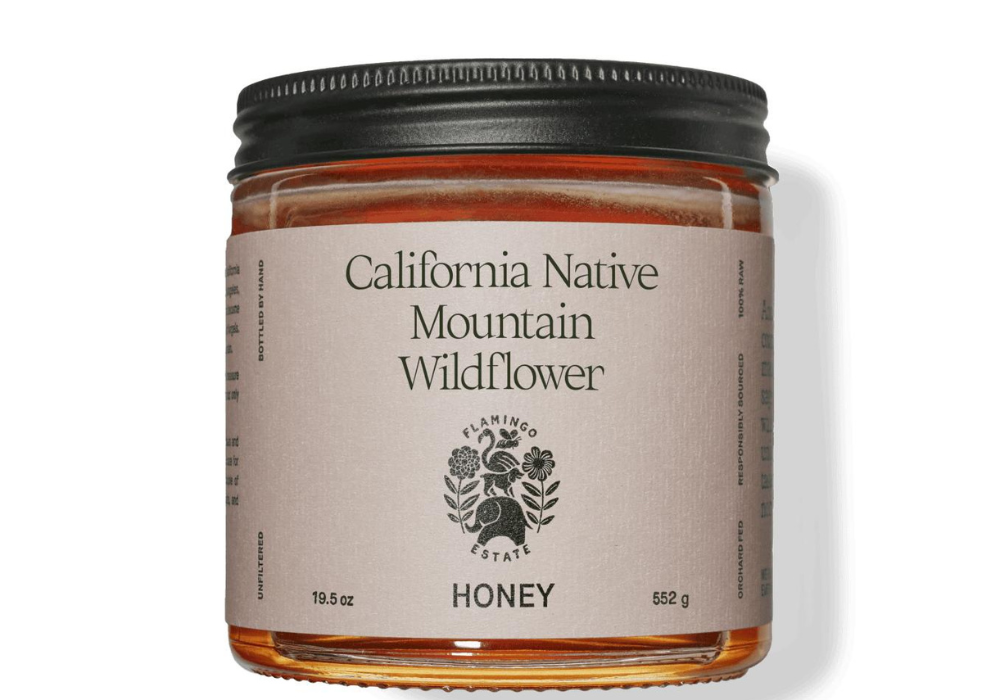
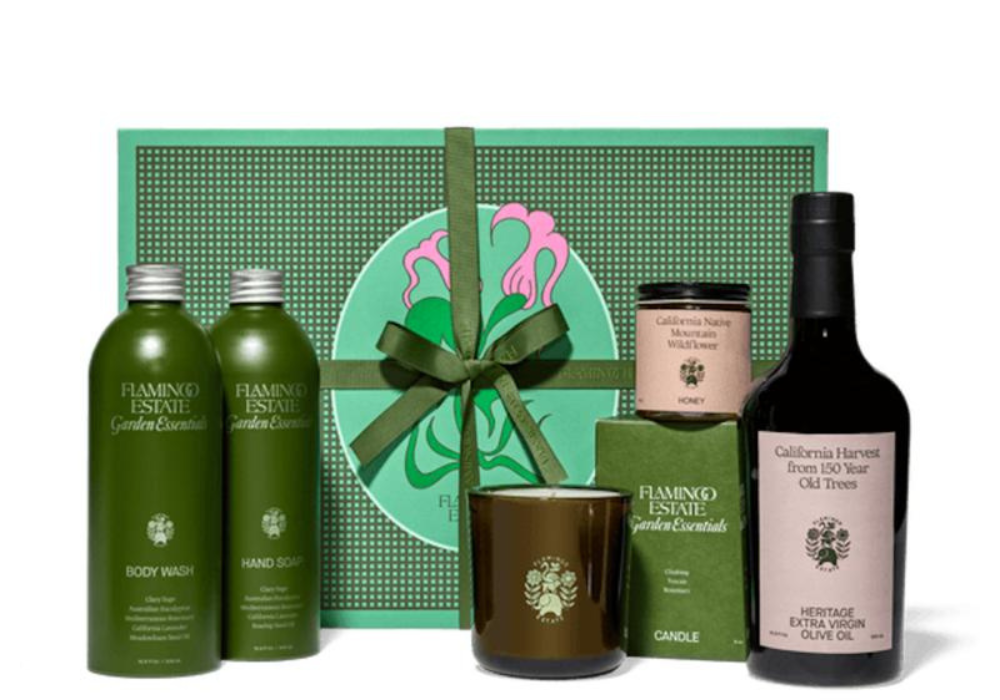
We built the company upside down. Most consumer founders pick a category, then source ingredients. We had ingredients—olive oil, sage, rosemary, honey, tomatoes—and we asked what they could become Business of Home, Apr. 7, 2025. Within two years we had developed about 150 products with farmers: soap, olive oil, candles, honey, vinegar, produce boxes, even bags of manure labeled “Good Shit” Business of Home, Apr. 7, 2025; Wikipedia, accessed April 2026.
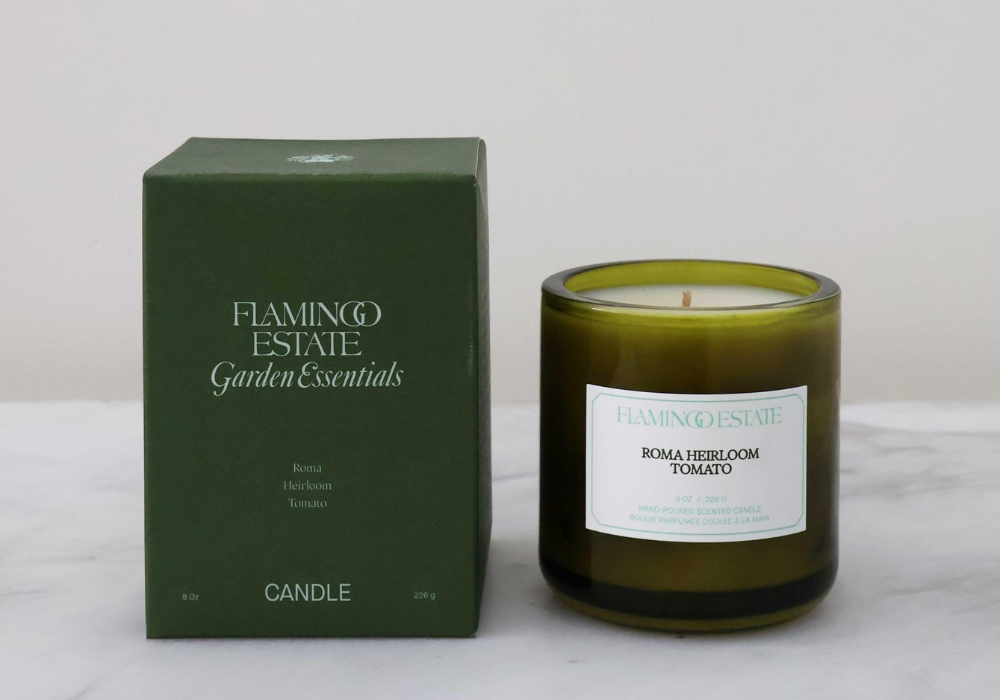
The candle was the hinge. The Roma Heirloom Tomato candle—$64 for a 9-ounce pour, vegetable wax, cotton wick, hand-poured in Los Angeles—became the early viral hit Inc., 2026; Flamingo Estate product page, accessed April 2026. Then Oprah put the Three Sisters Candle Set on her Favorite Things list in 2021 Oprah.com, Nov. 1, 2021. The traffic spike nearly took the site down Broadsheet, July 12, 2022. That was the moment the produce box became a luxury brand. The candle was the entry point; the garden was the story; the celebrity was the distribution.
The costs were real. We kept fulfillment in-house, which is expensive and operationally heavy, because Aaron and I believed the unboxing was part of the product Shopify, Apr. 7, 2026. We turned down the obvious venture playbook. Investors told us to become a supplements company, to kill the money-losing produce program, to build product lines around “need states.” Aaron’s response, on the record: “I hate marketing” verbatim, Shopify, Apr. 7, 2026. We were creative-led, not marketing-led, and that is a harder way to run a consumer business.
Inflection points
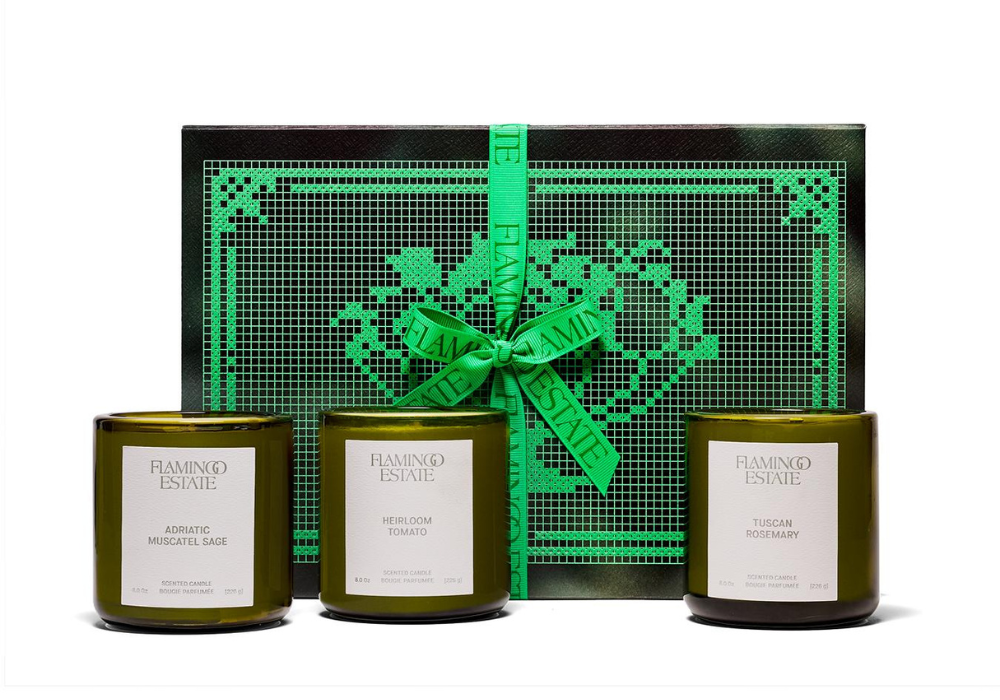
The Oprah moment (2021). The Three Sisters set—tomato, rosemary, sage—was not a new product. It was the garden in candle form. Oprah’s list turned it into a national gift. The site buckled. The tomato candle became the brand’s calling card Oprah.com, Nov. 1, 2021; Broadsheet, July 12, 2022. The data lesson was simple: earned media from a trusted curator outperformed every paid channel we had.
The LVMH rejection and “scaling scarcity” (undated, reported 2025). I went to LVMH looking for investment. They declined, but the person across the table said something I still think about: “You’re doing something that luxury brands and LVMH [are] hungry to do. I don’t think you even know you’re doing it” verbatim, Business of Home, Apr. 7, 2025. The thing was scarcity. A lavender farm can only make so much oil in a season. A sage farmer can only grow so much sage. I had been apologizing for that. I stopped. “We’ve got 400 bottles of this thing. Take it or leave it,” I said. “We’re not making more” verbatim, Business of Home, Apr. 7, 2025. That decision—to treat limited supply as the luxury, not the flaw—became the operating system of the brand.
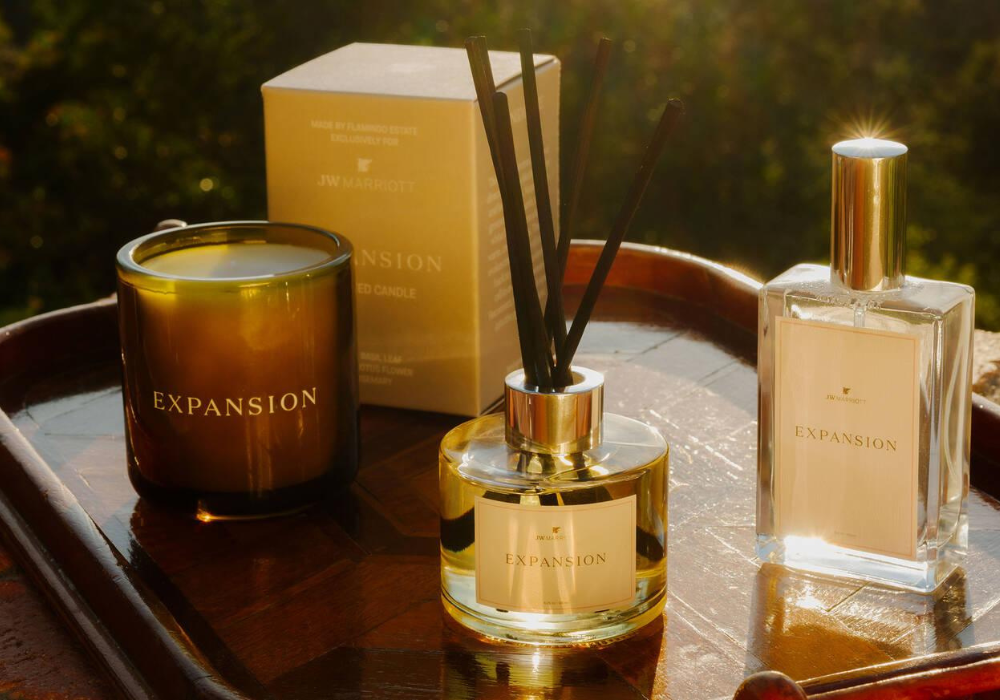
The JW Marriott partnership (2024). This was the first time the brand scaled without becoming wholesale. We created a custom scent called “Expansion,” inspired by the JW Gardens, and it scented the public spaces of JW Marriott properties worldwide. It was also sold as an eight-ounce candle for $65, plus a reed diffuser, room spray, and scent sticks Hollywood Reporter, Feb. 21, 2025; Marriott shop, accessed April 2026. The distinction matters: a hotel amenity is a brand residency, not a shelf-space deal. Guests smell the garden in the lobby, then buy the candle. The partnership made the brand global without making it generic.
The fundraising grind (2022–2024). I did roughly 160 investor meetings. I heard the same thing: get to 90% gross margin on personal care. I told one investor our hand soap was at 72% and that was a hard-won number. She said, “Come back to us when it’s at 90%” Glossy, Nov. 21, 2024. I said I never would, because to get there we would have to source differently and pay farmers differently. We eventually closed a first priced round in 2024 Wikipedia, accessed April 2026. PitchBook records earlier early-stage rounds in April 2022 and October 2023, with Point King Capital, Worklife Ventures, Synetro Group, and Trousdale Ventures as investors PitchBook, accessed April 2026. The amounts were not disclosed.
The turn / unraveling
The tension is not a crisis yet. It is a structural knot. Flamingo Estate is a luxury brand built on scarcity, but it is also a venture-backed consumer company that needs to grow. The wholesale footprint has widened: Nordstrom, Anthropologie, Bergdorf Goodman, Forward, Mecca, Bloomingdale’s, and JW Marriott Glossy, Nov. 21, 2024; Macy’s investor release, Jan. 23, 2025. Each partnership is curated, but the aggregate effect is that the brand is no longer hard to find. The house on the hill was intentionally hidden; the candle is now in a hotel lobby in Bengaluru.
The produce business remains a low-margin drag. Investors have pushed to kill it. We have refused Shopify, Apr. 7, 2026. The argument for keeping it is that the food is the proof of the garden—without the tomatoes, the tomato candle is just a scent. The argument against it is that a luxury house with a CSA box has a gross-margin problem. Both are true.
The founder is the media channel. I am the face of the JW Marriott campaign, the author of the books, the person who calls Pamela Anderson about her great-aunt’s pickle recipe Inc., 2026. That is an asset and a key-person risk. The celebrity collaborations—LeBron James’s rooftop honey, Julianne Moore’s honey, Laura Dern’s olive oil, Pamela Anderson’s pickles—are brilliant earned media, but they are not a moat. Anyone can call a celebrity. The garden is harder to copy.
The 2026 coverage describes a “$50 million business” with “big plans for hand-crafted luxury” Inc., 2026; Globe and Mail, June 22, 2026. That is the claim. The question is whether the brand can keep the “hand-crafted” promise while hitting that number.
PART II — BUSINESS ANALYSIS
Audience & positioning
Flamingo Estate sells to the affluent, design-literate, gift-buying consumer who wants a story with their candle. The celebrity and tastemaker layer—Oprah, LeBron, Julianne Moore, Martha Stewart, Gwyneth Paltrow’s Goop—provides social proof CNBC, Aug. 6, 2025. The JW Marriott partnership extends the audience to luxury hotel guests who encounter the scent in a lobby and then buy it for home Hollywood Reporter, Feb. 21, 2025. Price points sit in the accessible-luxury band: $64 for the tomato candle, $48 for olive oil, $46 for soap Inc., 2026.
The differentiation is provenance plus narrative. Diptyque has Paris; Byredo has Stockholm; Flamingo Estate has a specific hillside in Los Angeles with a goat shed and a porn-studio past. The weakness is that the brand is a cult, not a category. It depends on founder charisma, celebrity virality, and a physical place that cannot be replicated at scale. The candle market is crowded with credible competitors—Diptyque, Byredo, Le Labo, Trudon, Boy Smells—many with deeper distribution and decades of brand equity Vogue, Dec. 7, 2025; Wired, Feb. 14, 2025. Flamingo Estate’s edge is not the wax; it is the world.
Marketing & PR strategy
The marketing is the product. The estate is the set. The celebrities are the cast. The candles are the merchandise. That is not a metaphor; it is the operating model. Aaron Harvey has said the company is creative-led, not marketing-led, and that the driver is “the creativity, the story, the inspiration” verbatim, Shopify, Apr. 7, 2026.
Named, dated tactics:
| Initiative | Date | What it was | Source |
|---|---|---|---|
| Oprah’s Favorite Things | Nov. 2021 | Three Sisters Candle Set featured | Oprah.com |
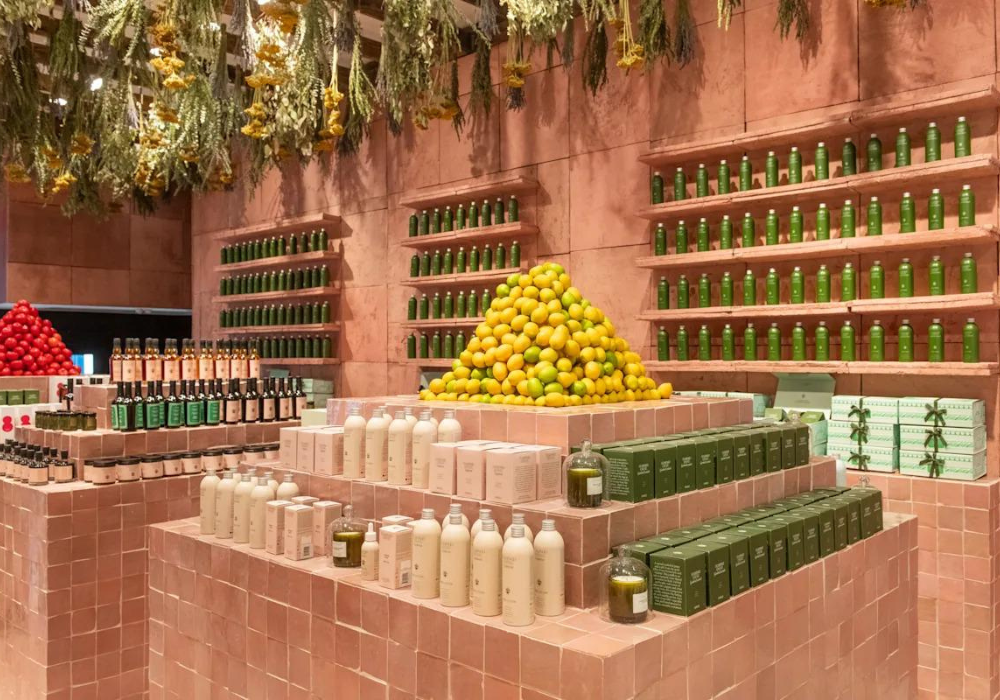
| Mytheresa East Hampton pop-up | Summer 2023, 2024 | “Railroad Racetrack” / “Inconvenience Store” | Vogue, June 28, 2024 |
| JW Marriott global partnership | 2024 | “Expansion” scent, amenities, candle | Happi, May 28, 2024 |
| Bloomingdale’s Carousel | Jan. 23, 2025 | Licensed pop-up market, 59th Street flagship | Macy’s investor release |
| “The Guide to Becoming Alive” | Nov. 2024 | 600-page book, $50, Chronicle Books | Glossy, Nov. 21, 2024 |
| Celebrity honey / olive oil / pickles | Ongoing | LeBron James, Julianne Moore, Laura Dern, Pamela Anderson | CNBC, Aug. 6, 2025 |
The earned-media engine is the founder’s network and the estate’s unusual history. The paid-media layer is thin by comparison. That is deliberate. The brand does not buy its way into the luxury conversation; it hosts the conversation at the house. The risk is that the model depends on Christiansen’s energy and relationships, and on the continued novelty of the estate as a backdrop.
Technology & analytics stack
Flamingo Estate runs on Shopify Plus. The migration and front-end refresh were handled by Pacific IQ, which also implemented Klaviyo for email, Attentive for SMS, and Okendo for reviews Pacific IQ case study, accessed April 2026. Tech-detection tools also record Gorgias (helpdesk), Rebuy (personalization), Yotpo and Junip (reviews), Triple Whale (analytics), Recharge (subscriptions), Routific (delivery routing), and Stripe (payments) DTC Proof, Oct. 1, 2026. Fulfillment is in-house, which is unusual for a brand of this size and a deliberate choice by the founders Shopify, Apr. 7, 2026.
These stack details are reported by agency pages and detection tools, not independently verified by Flamingo Estate. The company has not published a technology page or engineering blog. Treat the stack as “reported, not independently verified,” with Shopify Plus the highest-confidence layer because it appears in both the agency case study and public job postings Digital Product job listing, Oct. 21, 2025.
Growth milestones
| Date | Milestone | Source |
|---|---|---|
| 2013 | Christiansen buys the seven-acre estate | Wikipedia / WSJ, accessed April 2026 |
| March 2020 | Produce boxes launch from the Owl Bureau parking lot; 25 expected, 100 sold, then 300 | Shopify, Apr. 7, 2026 |
| 2021 | Oprah’s Favorite Things features the Three Sisters Candle Set | Oprah.com, Nov. 1, 2021 |
| 2022 | Revenue of almost $10 million | Wikipedia / WSJ, accessed April 2026 |
| Apr. 2022 | Early-stage VC round (PitchBook) | PitchBook, accessed April 2026 |
| Oct. 2023 | Early-stage VC round (PitchBook) | PitchBook, accessed April 2026 |
| 2024 | JW Marriott global partnership; first priced fundraising round reported | Happi, May 28, 2024; Wikipedia / WSJ |
| Jan. 23, 2025 | Bloomingdale’s Carousel pop-up opens at 59th Street | Macy’s investor release |
| Aug. 2025 | CNBC reports $30 million annual run rate, forecasting $50 million by early 2026 | CNBC, Aug. 6, 2025 |
| 2026 | Inc. describes a $50 million business | Inc., 2026 |
Financials
| Metric | Value | As of | Source | Note |
|---|---|---|---|---|
| Revenue, 2022 | ~$10 million | 2022 | Wikipedia / WSJ | Founder-reported |
| Revenue, 2024 estimate | <$10 million | 2024 | BeautyMatter, June 2, 2024 | Industry estimate; conflicts with 2022 and 2025 figures — see reconciliation |
| Revenue, 2025 run rate | ~$30 million | Aug. 2025 | CNBC, Aug. 6, 2025 | “$30 million a year operation” |
| Revenue, 2026 claim | ~$50 million | 2026 | Inc., 2026; CNBC, Aug. 6, 2025 | Projection / claim, not audited |
| Employees | 42 | 2026 | PitchBook, accessed April 2026 | Platform-reported |
| Funding rounds | 2 early-stage VC (2022, 2023); first priced round 2024 | 2024 | PitchBook; Wikipedia / WSJ | Amounts undisclosed |
| Investors | Point King Capital, Worklife Ventures, Synetro Group, Trousdale Ventures | 2026 | PitchBook | Minority stakes |
| Valuation | not publicly verifiable | — | — | No public filing or confirmed report |
| Soap gross margin | 72% | 2024 | Glossy, Nov. 21, 2024 | Christiansen, on the record |
| Profitability | not publicly verifiable | — | — | No audited financials |
The financial picture is a company that crossed $10 million in 2022, was described by its founder as on track to profitability in Q2 2023 [The Case for Brand, July 6, 2024](https://thecaseforbrand.substack.com/p/how-flamingo-estate-turned-heirloom), and then raised institutional capital in 2024 on a growth story. The $30 million-to-$50 million trajectory is founder-reported and press-reported, not audited. Treat it as directional.
Lessons for founders
1. Build the world before the product line.
The first Flamingo Estate product was a box of vegetables from a farm that was about to fail. The brand existed before the candle. The lesson is not “start with produce.” It is that a world—a place, a set of values, a cast of characters—can precede a SKU. The 2020 parking lot is the evidence Shopify, Apr. 7, 2026.
2. Scarcity is a business model, not an apology.
The LVMH rejection gave Christiansen the insight that limited supply is the luxury. He stopped pretending to be bigger and started saying “we’ve got 400 bottles, take it or leave it” Business of Home, Apr. 7, 2025. The lesson is to price and position the constraint, not hide it.
3. Don’t let investors turn a garden into a supplement company.
The Shopify interview is the cleanest evidence: investors pushed supplements, “need states,” and killing the produce program; the founders refused Shopify, Apr. 7, 2026. The lesson is that category-blind advice is common, and the founder’s job is to know which advice applies to the business they actually have.
4. The founder is the media channel — and that is a risk.
Christiansen’s books, interviews, celebrity relationships, and the estate itself are the acquisition engine. The JW Marriott campaign, the Oprah hit, the Bloomingdale’s pop-up—all of it runs through his network and his story. That is efficient. It is also a single point of failure. The lesson is to build institutional brand assets—the estate, the scent library, the farmer network—that can outlast the founder’s calendar.
5. Wholesale partnerships should be residencies, not distribution.
JW Marriott worked because it was a co-created scent and an experience, not a shelf-space deal. Bloomingdale’s worked because it was a Carousel takeover, not a wholesale account. The contrast is the risk of broad wholesale: it moves units but erodes the “hard to find” mystique. The lesson is to choose partners who borrow the brand’s world rather than flatten it.
Present state & honest ledger
Verified
- Flamingo Estate is a Los Angeles lifestyle and wellness brand built around Richard Christiansen’s seven-acre estate, selling candles, soap, olive oil, honey, produce, and pantry goods Wikipedia, accessed April 2026.
- The company launched in 2020 selling produce boxes during the pandemic; the tomato candle and Oprah’s 2021 Favorite Things list were inflection points Shopify, Apr. 7, 2026; Oprah.com, Nov. 1, 2021.
- Revenue was approximately $10 million in 2022 and a reported $30 million run rate in 2025, with a $50 million claim for 2026 Wikipedia / WSJ; CNBC, Aug. 6, 2025; Inc., 2026.
- The company has institutional investors including Point King Capital, Worklife Ventures, Synetro Group, and Trousdale Ventures PitchBook, accessed April 2026.
- It runs on Shopify Plus with an in-house fulfillment operation and a reported stack of Klaviyo, Attentive, Okendo, Gorgias, Rebuy, Triple Whale, Recharge, and Routific Pacific IQ; DTC Proof, Oct. 1, 2026; Shopify, Apr. 7, 2026.
Not publicly verifiable
- Exact funding amounts, valuation, and cap-table terms.
- Audited revenue, profitability, and gross margin by category.
- Customer count, repeat-purchase rate, and subscriber retention.
- The split between DTC, wholesale, and hospitality revenue.
- Current store count or pop-up performance.
- The identity of the “dream investor” referenced by Christiansen in November 2024 Glossy, Nov. 21, 2024.
More Stories Behind Remarkable Businesses
Flamingo Estate is one example of how unconventional ideas, bold decisions, and a distinctive brand identity can shape a business.
Explore our Founders Series for more stories about the people, strategies, and turning points behind ambitious brands.

 English