Table of Contents
AI customer service for small businesses can make the difference between waking up to missed opportunities and waking up to customer questions that have already received helpful answers.
Imagine this: you wake up, grab your coffee, and check your phone.
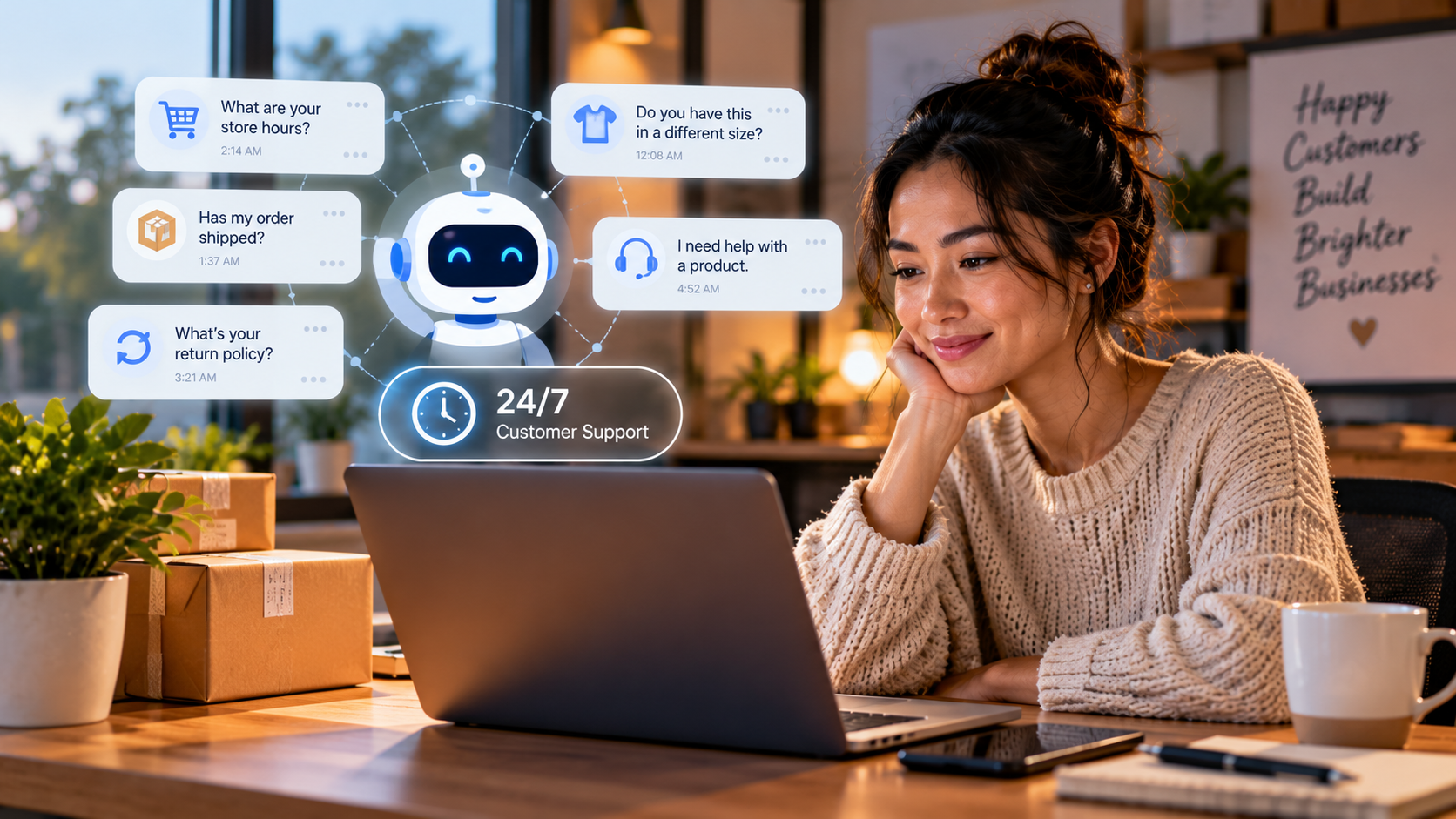
Overnight, five customers reached out to your business.
Two wanted to know your opening hours. One asked whether an order had shipped. Another needed clarification about your return policy. And the last customer had a problem with a product they’d purchased.
If you’re running a small business and handling customer support yourself, you know how quickly those messages can pile up.
By the time you respond, some customers may have already moved on.
But what if your business could answer routine questions while you sleep, collect important customer details, and flag complicated issues for you to handle personally?
That’s where AI-powered customer service becomes useful.
You don’t need a huge support team or advanced technical skills to get started. With the right setup, an AI assistant can help customers find answers around the clock while keeping human support available for situations that require judgment, empathy, or personal attention.
In this guide, we’ll walk through how to choose the right AI customer service tools, train them to reflect your brand voice, build reliable support workflows, and measure whether the system is actually helping your business.
Because customers should be able to reach your business even when you’re unavailable—and they should know when a real person will step in.

 English